Albumin Assay – Bromocresol Green method

Practical Documentation:

Aims

To perform serum albumin determinations on samples, explain the principle behind the Bromocresol Green method for albumin measurement and to list the factors that will cause interference with this method.

Principle

Albumin is known for its ability to bind many types of organic compounds, including organic dyes. When albumin selectively binds with Bromcresol Green (BCG) it causes a change in the absorbance maximum of BCG. The intense blue-green complex that is formed has an absorbance max of 670nm. Bromocresol reagent at pH 4.3 is negatively charged. The pI of albumin is 4.7.

For all spectrometric assays, always use a Reagent
blank
. It usually contains all diluents and reagent in the reaction
solution, but no sample. Some reagent blanks do contain the sample as well, but
they lack one crucial reagent component needed to produce a colour-yielding
reaction. This is different from the water used to zero a spectrophotometer
(set 100% T).

Materials:

  1. Albumin Stock Solution (100g/L)
    or Cobas calibrator
  2. Serum patient samples (record
    the albumin results off track)
  3. Cobas albumin controls
  4. Bromocresol green reagent (BCG)
    – obtain Cobas reagent or make up as follows:
  5. 7.5mg of
    BCG
  6. 250mg
    EDTA
  7. 250µL
    Tween 20
  8. Bring up
    to 25mL with water

Methods:

  1. Generate a calibration curve of
    at least 8 standards (0- 80 g/L) by diluting the Albumin Stock (100 g/L).
  2. In labelled tubes, set up a
    calibration, controls and test samples as follows:
Sample Water (µL) Std (µL) Control (µL) Sample (µL) BCG Reagent (µL)
Blank 310 300
Calibrators 300 10 300
Control 300 10 300
Serum Sample 300 10 300
Figure 1. Setting up the standards for the calibration curve.

To set up a standard curve with more points along the usable range, I chose more points in the concentration range 20 – 40 g/L, which in my experience constitutes the bulk of albumin measurements.

3. Mix well read immediately at 630nm and record absorbances

Layout of
wells
Dilution as
per manual
  Dilution of
1:2 with H2O
 
  1 2 3 4
A Standard 0 Unknown 1 Standard 0 Unknown 1
B Standard 1 Unknown 2 Standard 1 Unknown 2
C Standard 2 Unknown 3 Standard 2 Unknown 3
D Standard 3 Unknown 4 Standard 3 Unknown 4
E Standard 4 Unknown 5 Standard 4 Unknown 5
F Standard 5 QC Low Standard 5 QC Low
G Standard 6 QC High Standard 6 QC High
H Standard 7   Standard 7  
Layout of wells
Layout of wells
Absorbance Absorbance
Standard concentration (g/L) No dil Dil 1:2 (150uL reagent mix + 150uL H2O
0 0.095 0.065
20 0.506 0.245
25 0.719 0.345
30 0.779 0.395
35 0.784 0.411
40 0.999 0.504
50 1.242 0.593
80 1.477 0.68

4. Plot a standard curve and determine experimental concentrations of controls and serum samples

Figure 2 – Deriving the formula was done with a statistical Calculator by entering the respective X- and Y-values into a table and obtaining a slope and y-intercept by linear regression. Only the neat reagent mix’s formula was done manually with a calculator. Slope (b) was calculated to be 0.01769 and y-intercept (a) was 0.206.
These values corresponded to the values when plotting an X-Y plot on Microsoft Excel (see 2 standard curve data plots above).

The figure below illustrates the formula used to determine the unknown concentrations.

Unknown concentrations were calculated as follows:

Unknowns
Sample no.
Absorbance Absorbance
(Diluted 1:2)
  Calculated concentration Calculated concentration
(Diluted 1:2)
Reference albumin values (from Roche Cobas 6000)
1 0.893 0.48 Hemolysed 38.8 44.2 29.1
2 1.057 0.55   48.1 53.0 44.2
3 0.614 0.334   23.1 26.0 22
4 0.997 0.5 Hemolysed 44.7 46.7 38.6
5 0.894 0.479   38.9 44.1 33.2
Lo 0.843 0.453   36.0 40.9 31.9
Hi 1.161 0.593   54.0 58.4 49.4

Compare results to expected results and comment on any differences between the manual BCG vs automated BCP assays.

Figure 3 – Manual BCG method vs. Automated BCP method (Roche). It can be seen that the manual BCG method overestimated the albumin concentration in all serum samples.
A possible explanation for this difference is:
1. Pipetting error
2. Interferring substances in the serum which absorb light at 670nm.
3. It may be due to the fact that albumin stock solution was made up with water as opposed to physiological albumin-free serum matrix.
4. Hemolysis – Evidenced by one of the hemolysed samples which clearly measured falsely high.

A haemolysed sample is brought to the laboratory for albumin analysis. Can the sample be used? Discuss.

Yes. Hemoglobin does not absorb light at 670 nm, therefor will not interfere significantly with the analysis. See figure below:

It does however interfere in the following manner:

Hemoglobin decreases the apparent albumin concentration by 1 g/L for each 100 g/L added. Blanking does not correct this interference, and the negative bias is therefore caused by interference with the dye binding rather than hemoglobin color. For the BCP method, a blank correction is required on icteric sera and on grossly hemolyzed and grossly lipemic sera to correct for an underestimation of albumin caused by these agents. Heparin causes a positive interference with BCP and BCG methods. This interference can be eliminated by the addition of hexadimethrine bromide to a concentration of 50 mg/L in the BCP reagent

Kaplan’s Methods

Why is it not desirable to incubate the reaction before measuring the absorbance?

Incubating the sample can give rise to other non-specific binding of analytes in the sample to the chromophore dye and a falsely elevated reading can be obtained.

Some analyzers can measure the absorbance of the BCG reaction within 30 seconds after adding sample. Does this tend to increase the specificity of the reaction?

Yes. The less time there is for other interfering substances to bind to BCG, potentially the more specific it will be to albumin, as albumin is the more specific binding to BCG.

Probably the most promising adaptation of the BCG reaction for albumin analysis utilizes fast reaction readings. Gustafsson reported that measuring the absorbance of the BCG-protein complex at 629 nm at a time shortly after mixing improves the specificity of the assay. Interference by other proteins such as ceruloplasmin and orosomucoid becomes significant at times greater than 5 minutes.

Kaplan’s Methods


Total Protein assay – Bradford

Practical 3 :
PROTEIN ASSAY- BRADFORD
Total /100

INTRODUCTION
The Bradford protein assay, is a spectrophotometric assay that is more popular for protein concentration determination than other known protein assay such as the Lowry assay. The Bradford assay is simple, more sensitive and faster than other protein assays (Kruger, 2009). This assay is an example of a dye-binding assay and the dye used is Coomassie Brilliant Blue G-250 (Bradford, 1976; Becker, Caldwell and Zachgo, 1996; Kruger, 2009; Nouroozi and Noroozi, Moulood Valipour Ahmadizadeh, 2015). The principle of this assay relies on the physical interaction of the dye and protein in solution and results in an observable change in colour. The colour change is as follows; red (Amax 465 nm), when not bound to proteins and blue (Amax 595 nm) form of the dye carries a (-) charge and interacts with (+) charges on proteins to form a complex (Becker, Caldwell and Zachgo, 1996).

OBJECTIVES
2.1. To prepare standards through a series of dilutions
2.2. To measure the unknown concentration of a protein in solution via a spectrophotometer
2.3. To analyse, interpret results about CV%, SD, LOD and LOQ.

PROCEDURES
A. PREPARATION BEFORE THE PRACTICAL
Complete the following BEFORE your practical session:
• You would need to do some extra reading on the Bradford protein assay and spectrophotometer principles (i.e. Beer Lambert law) in preparation for your practical and test.
• Find and print SDS’s for the following chemicals; Tris (trisaminomethane), Hidrochloric acid (HCL), ethanol, Phosphoric acid and Coomassie Brilliant Blue G-250.
• Prepare a practical plan for your experiment that you will be conducting today.

B. PRACTICAL SESSION (Total 50)
Complete the following DURING your practical session:
(1) Complete the practical test.
(2) Using the Bradford Assay determine as follows:
Materials provided:
• Tris buffer: 10 mM Tris-HCl (pH 7.0)]
• Bovine serum albumin (BSA) stock solution: [2 mg/ml BSA in Tris buffer (pH 7)]
• Bradford reagent; [0.01% (w/v) Coomassie Brilliant Blue G-250, 4.7% (w/v) ethanol, 8.5% (w/v) phosphoric acid]
• Unknown protein sample

Method:
a) In Eppendorf tubes, prepare a series of BSA solutions of varying concentration by diluting the
2 mg/ml BSA stock solution with Tris-HCL buffer (You will need ~200μL of each dilution) to set up a calibration curve (at least 7 concentrations to be used).

Serial dilutions were made in 1.5mL Eppendorf tubes:

Standard no. Protein concentration (ug/ml)
1 (500uL of provided 2ug/ml stock solution) 2
2 (250 uL of S1 plus 250uL Tris-HCl diluent) 1
3 (250 uL of S2 plus 250uL Tris-HCl diluent) 0.5
4 (250 uL of S3 plus 250uL Tris-HCl diluent) 0.25
5 (250 uL of S4 plus 250uL Tris-HCl diluent) 0.125
6 (250 uL of S5 plus 250uL Tris-HCl diluent) 0.0625
7 (250 uL of S6 plus 250uL Tris-HCl diluent) 0.03125
8 (Also Blank – Only 250uL Tris-HCl) 0
Standard preparations.

b) Add 2.5 mL of Bradford reagent to a separate cuvette for each of your samples and label them appropriately. Consider the value of determining the concentration of one or more dilutions of your unknown sample as well as the undiluted (“neat”) unknown sample.

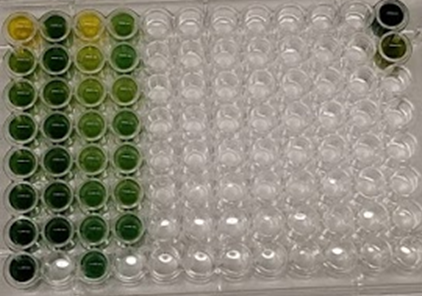
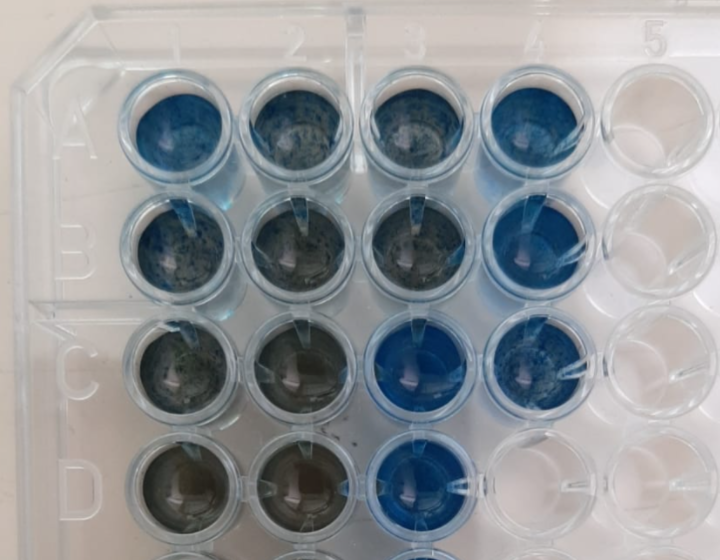
To save cuvettes, I have used an old refurbished microtitre plate with 10x less volume, hence 250uL

c) Prepare your samples by adding 50μL of each protein sample (diluted standard or unknown) separately to the Bradford reagent in the appropriately labelled tube. Mix the tubes by gentle inversion several times, and let the colour develop for 5 min. Observe and record the colour change of your standard samples as a function of protein concentration. A blank sample is prepared by mixing 50μL Tris buffer with 2.5 ml Bradford reagent.

As above, to save reagent and test my pipetting skills, I have used 5uL as one set of additions and also made a 1:1 (2x) dilution of my standards to run another calibration curve. The unknown sample was also added as neat and a 2x dilution.

d) You will need to determine which portion of the UV/vis spectrum, specifically which wavelength will be useful for following the dye bound by protein. Take a full spectral scan of your Bradford reagent blank. When your standard samples have fully developed, take a full spectral scan of the most concentrated standard you prepared.

Fig. 1 – Wavelength scan of the reagent blank as well as the Highest standard after full colour development.

e) Based on your results, choose a single wavelength suitable to analyse the results of your dye-binding assay. Measure and record the absorbance of each standard and unknown sample at your chosen wavelengths using cuvettes.

From above wavelength scan it is evidenced that the maximum absorbance after colour development occurs at 595 as published widely in the literature for the Bradford assay. I am, however going to perform a slight variation also published before, by using the ratio of absorbance 595nm/465nm as the signal, as it has before been shown to be more sensitive. The rationale thereof is that there is reduction of absorbance intensity at 465nm and increase of intensity at 595nm, hence likely causing slight increases in sensitivity and arguably a more accurate assay.

f) At your determined wavelength, read your unknown sample at approximately every 10 minutes for 1 hour, you will use these readings to calculate the percentage (%) change over time.

Fig. 2 – To calculate the %change over time is relatively simple by using the slope of the linear regression line: If using the orange line’s formula at 595nm only: slope = – 0.0081, which means that the absorbance values decreases in general by 0.0081 AU per minute. This is, however subject to variability as the reagent/protein complexes was observed as precipitating out and the final portion of the curve (after 50 min) is likely not fitting due to this phenomenon. Nevertheless, using a decrease of 0.0081AU per minute, means that at an absorbance value of 1.25 (top of the calibration curve), 0.0081/1.25*100 = 0.65% decrease in absorbance per minute.
Fig. 3 – Indication of precipitation happening after an hour of incubation.

g) Prepare your highest standard in five (5) cuvettes and read the absorbances of each cuvette two times, so in total you will have 10 readings. These results you will use to calculate the protein concentrations and then calculate the CV% and SD

h) Make sure your lab space is clean and disinfected.

C. AFTER PRACTICAL SESSION
Complete the following for submission before or during the next practical
Answer the following questions:

QUESTION 1 (Total 15)
Using the resulting equation for the calibration curve, determine the protein concentration of your unknown sample.

Prot. Conc Abs 595 465nm 595/465 ratio
2 1,4949 0,488 3,06332
1 1,146 0,6248 1,834187
0,5 0,9158 0,7388 1,239578
0,25 0,7401 0,8203 0,902231
0,125 0,6648 0,8788 0,756486
0,0625 0,6138 0,9023 0,680262
0,03125 0,5932 0,9143 0,648802
0 0,5633 0,9234 0,610028
Table 1 – Absorbance values obtained

To determine the unknown:

Via AU595nm:

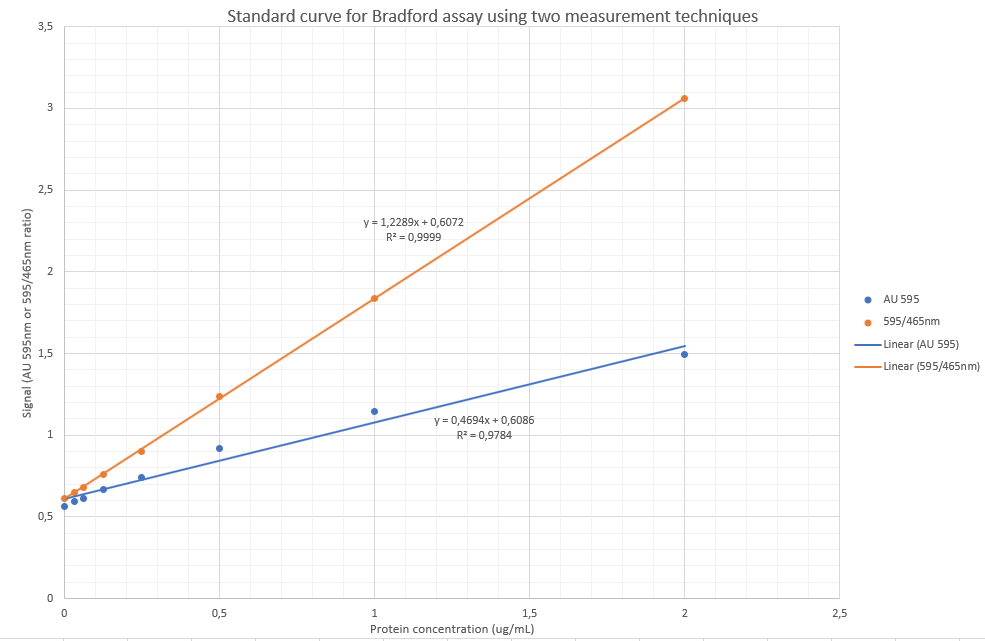
y=0.4694x + 0.6086

x= (y-0.6086)/0.4694

x= 1.34g/L

Via the 595/465nm ratio:

y = 1.2289x + 0.6072

x=(y-0.6072)/1.2289

x= 1.25g/L

QUESTION 2 (Total 10)
Calculate the percentage (%) change over time of your unknown sample and comment on the stability of your assay.

Referring to Fig. 2 – To calculate the %change over time is relatively simple by using the slope of the linear regression line: If using the orange line’s formula at 595nm only: slope = – 0.0081, which means that the absorbance values decreases in general by 0.0081 AU per minute. This is, however subject to variability as the reagent/protein complexes was observed as precipitating out and the final portion of the curve (after 50 min) is likely not fitting due to this phenomenon. Nevertheless, using a decrease of 0.0081AU per minute, means that at an absorbance value of 1.25 (top of the calibration curve),

0.0081/1.25*100 =

0.65% decrease in absorbance per minute.

The stability of the assay is likely around 15-20 minutes.

QUESTION 3 (Total 15)
Calculate the CV% and SD using your data.

Absorbance Value Calculation
1.6096
1.6124
1.5923
1.5345
1.498
1.5602
1.5624
1.5425
1.4823
1.4567
Stdv 0.050538
Mean ( (Sum of values)/n) 1.54509
CV% 3.270859 %
Calculation of mean absorbance and CV on the highest standard.

QUESTION 4 (Total 10)
Calculate the LOD, LOQ, and comment on the linearity of your assay.

Using only the 595nm absorbance yielded a poor result (r=0.9784).

Using the 595/465 ratio, the linearity was much better (r = 0.9999)

SE of intercept: Excel Function: STEYX(X-values;Y-values)

LOD = 3.3 * (SD of intercept / slope)

LOQ = 10 * (SD of intercept / slope)

Prot. Conc Abs 595 465nm 595/465 ratio
2 1,4949 0,488 3,06332
1 1,146 0,6248 1,834187
0,5 0,9158 0,7388 1,239578
0,25 0,7401 0,8203 0,902231
0,125 0,6648 0,8788 0,756486
0,0625 0,6138 0,9023 0,680262
0,03125 0,5932 0,9143 0,648802
0 0,5633 0,9234 0,610028
AU595 only
Slope 0,469384
STEYX 0,052252
LOD 0,367358 ug/mL
LOQ 1,113206 ug/mL
595/465 ratio
Slope 1,228876
STEYX 0,051192
LOD 0,137467 ug/mL
LOQ 0,416565 ug/mL
Table 2 – Limit of detection (LOD) and limit of quantification (LOQ) between the different measuring procedures.

REFERENCES:
Becker, J. M., Caldwell, G. A. and Zachgo, E. A. (1996) ‘Protein Assays’, in Biotechnology. Elsevier, pp. 119–124. doi: 10.1016/b978-012084562-0/50069-2.
Bradford, M. M. (1976) A Rapid and Sensitive Method for the Quantitation of Microgram Quantities of Protein Utilizing the Principle of Protein-Dye Binding, ANALYTICAL BIOCHEMISTRY.
Kruger, N. J. (2009) ‘The Bradford Method For Protein Quantitation’, in The Protein Protocols Handbook. Humana Press, Totowa, NJ, pp. 17–24. doi: 10.1007/978-1-59745-198-7_4.
Nouroozi, R. V. and Noroozi, Moulood Valipour Ahmadizadeh, M. (2015) ‘Determination of Protein Concentration Using Bradford Microplate Protein Quantification Assay’, International Electronic Journal of Medicine, 4(1), pp. 11–17. doi: 10.31661/iejm158.

Raw data:


Hypernatremia

HOSP # WARD Red Cross Children’s Hospital ICU
CONSULTANT Dr. S
Prof. G
DOB/AGE 14 day old Neonate

Abnormal Result

Sodium = 198 mmol/L (H) (136-145)

Presenting Complaint

1 day of poor feeding.  Child passing very hard/ dark brown stool for the preceding 10 days.

History

Birth weight @ term: 3.380kg.  Delivered vaginally after induction of labour because of spontaneous rupture of membranes at 40 weeks gestation. Discharged home without any problems after 1 day.

Examination

On arrival at district hospital: Temp: 38oC, Sats 96% on Nasal O2, Finger prick glucose: 10mmol/L, Capillary refill time: 6 seconds,

HR: 140bpm. 

Blood gas:

pH: 7.26,

BE -16.3,

pCO­2 3.2 kPa,

Na 190.

Weight: 2.2kg (birth weight: 3.380 kg, thus 35% weight loss)

Laboratory Investigations

Other Investigations

Urine organic acid analysis by GCMS demonstrates elevation of the liver markers 4-OH-phenyllactate and 4-OH-phenylpyruvate together with lactaturia. Succinylacetone, a marker for tyrosinaemia type 1 is absent. Moderate ketonuria with elevated dicarboxylic acids C6, C8, and C10 is also present, these changes suggest a lipolytic response to catabolic or fasting stress or hypoglycaemia together with underlying hepatic dysfunction with lactataemia but are non-specific for an IMD per se. 

Final Diagnosis

Patient was pure water depleted with a sodium concentration of 198 mmol/L.  The mother was not lactating adequately despite the infant sucking well, evidenced by the fact that when expressed breast milk was tried, there was too little milk for the baby to drink.  The nurses’ notes confirmed this finding.  This finding also confirms the failure to produce stool volume and the normal urine organic acid profile with evidence of starvation / fasting stress.

Take Home Messages

When considering a patient with high plasma sodium concentration it is
important to bear in mind:

  1. Hypernatremia does not necessarily indicate an excess of extracellular sodium.  Except in rare cases of salt overload most patient with hypernatremia have a deficiency of both water and sodium, with the water deficiency being proportionally higher than that of sodium.
  2. Patients become hypernatremic because the water lost from the body exceed the intake and there is negative fluid balance.  The amount of water which a person can drink generally exceeds by far the amount lost from the body in most pathological fluid-losing disorders, eg. Diarrhoea, sweating.  Patients thus become hypernatremia due to:
    1. Too old, young or sick to drink
    2. Obstruction of oesophagus
    3. Disorders of thirst centre
    4. No access to water                          

Ref: Walmsley – Cases in Chemical Pathology 4th
ed.

It is also important:

  1. To calculate the Osmolar gap( difference between calculated and measured osmolarity)
  2. U:P osmol (>1 = hypotonic fluid depletion, pure water loss or salt gain; ~1 = osmotic diuresis; <1 = diabetes insipidus ~the various causes of nephrogenic and neurogenic DI)


Prolactin

HOSP # WARD ENT Clinic
CONSULTANT   DOB/AGE 35 Y Male

Abnormal Result

Prolactin 10 986.0 ug/L (4-15.2) 

Dilutions:

1/10  >4700;

1/100 = 10821;

1/50 = 10 986.

Presenting Complaint

Epistaxis

History

Patient with epistaxis referred to the ENT specialist clinic.  No relevant medication history.

Examination

35 y male with a large left post-nasal space mass, a vascular mass involving the pituitary fossa.

?NBL (non-benign lesion)

?Sinonasal malignancy

?Pituitary Tumour

Laboratory Investigations

TSH 0.91 pmol/L (0.27-4.20)

Free T4 15.7 pmol/L (12-22)

FSH 0.8 IU/L ↓ (1.5-12.4)

LH 0.2 IU/L ↓ (1.7-8.6)

Testosterone 0.2 nmol/L ↓ (8.6-29.0)

PTH 1.7 pmol/L (1.6-6.9)

Prolactin measuring method:

The Elecsys prolactin sandwich immunoassay uses two monoclonal
antibodies directed against human prolactin.

R1 = biotinylated antibody – recognizes the N-terminal end of the
prolactin molecule

R2 – ruthenium complexed antibody probably reacts with a region in the
middle of the prolactin molecule.

1st incubation: a biotinylated monoclonal prolactin-specific
antibody and a monoclonal prolactin-specific antibody labeled with a ruthenium
complex form a sandwich complex.

2nd incubation: after addition of streptavidin-coated
microparticles, the complex becomes bound to the solid phase via interaction of
biotin and streptavidin.

Reaction mixture aspirated into the measuring cell where microparticles
are magnetically captured into the surface of the electrode.   Unbound substances are then removed with
ProCell. 

Application of a voltage to the electrode then induces
chemiluminescent emission which is measured by a photomultiplier, results
calculated by a standard curve.

Other Investigations

Monomeric prolactin – 7744 ug/L (70% recovery after PEG precipitation)

Biopsy: confirmed tumour stained strongly positive
with prolactin suggesting a prolactinoma.

Final Diagnosis

Pituitary Macroprolactinoma

Take Home Messages

Sandwich immunoassays are prone to high dose hook-effect. There are
various ways to overcome this effect. (This will later be expanded on – see AFP
/ Beta-HCG).

Prolactin appears in the serum as:

  1. Active monomeric
    prolactin (“little”) (80%) 23kDa
  2. Inactive dimeric
    prolactin (“big”) (5-20%) 50-60kDa
  3. Low activity
    tetrameric prolactin (“big-big”) (0.5-5%) 150-170kDa 

Precipitation by PEG yields the active monomeric
prolactin, expressed as a percentage recovery after precipitation.  Big-big prolactin consists of an
antigen-antibody complex of monomeric prolactin-immunoglobulin G and is defined
as macroprolactin.  This has a long
half-life in blood when compared to normal prolactin and gives false high
readings of prolactin, leading to unnecessary investigations in certain
cases.  A high prolactin should thus be
confirmed by doing a PEG precipitation.


Fluid Triglycerides

HOSP # WARD Surgical ICU
CONSULTANT   Dr. Heleen Vreede DOB/AGE 23y Female

Abnormal Result

Fluid triglycerides were requested on three samples, without any clinical information.

Presenting Complaint

The laboratory history was explored, to find that the patient had three subsequent samplings daily from a pleural fluid cavity.

History

A month prior to presentation, the patient had a breached stillbirth.

The following was found on Histology:

EPISODE NUMBER:
SA03381462
CLINICAL DETAILS:
23 year old female. G02 P2-1. VDRL: negative. Smoking: 8/day. Alcohol: none. HIV: negative. 750g breech stillbirth at 28/40.
MACROSCOPY:
The plate measures 130 x 100 x 30mm and weighs 196.8g.
The membranes are complete without evidence of meconium staining.
The cord measures 300mm in length with an average diameter of 15mm. Three umbilical vessels are identified with 3 twists per 100mm. The cord insertion is off-centre, 20mm from the plate margin.
Congested blood vessels are identified on examination of the foetal surface.
Cut-sections of the plate show:
- Retroplacental clot.
MICROSCOPY:
General:
Placental weight for gestational age is below the 10th percentile at 196.8g. Partial autolysis is present throughout the specimen.
The umbilical cord and membranes:
The umbilical cord contains two arteries and one vein. There is no evidence of vasculitis or funisitis. Wharton's jelly and membranes do not show meconium uptake. The amniocytes are intact and show no evidence of vacuolation or hyperplasia.
Chorionic plate:
The chorionic plate vessels are focally dilated. There is no evidence of chorioamnionitis.
Villi and intervillous spaces:
The stem villous vessels show partial obliteration as well as stromal sclerosis. Distal villous hypoplasia as well as accelerated villous maturation is seen. Intervillous thrombi are seen as well as intraparenchymal extension of the retroplacental haematoma. There is no evidence of infarction, villitis or intervillositis.
Maternal surface:
There is evidence of a large retroplacental haematoma. No chronic deciduitis or untransformed blood vessels are seen.
PATHOLOGICAL DIAGNOSIS:
Placenta, examination:
Maternal vascular malperfusion.
Retroplacental haematoma.
Reported by: Dr M Du Toit

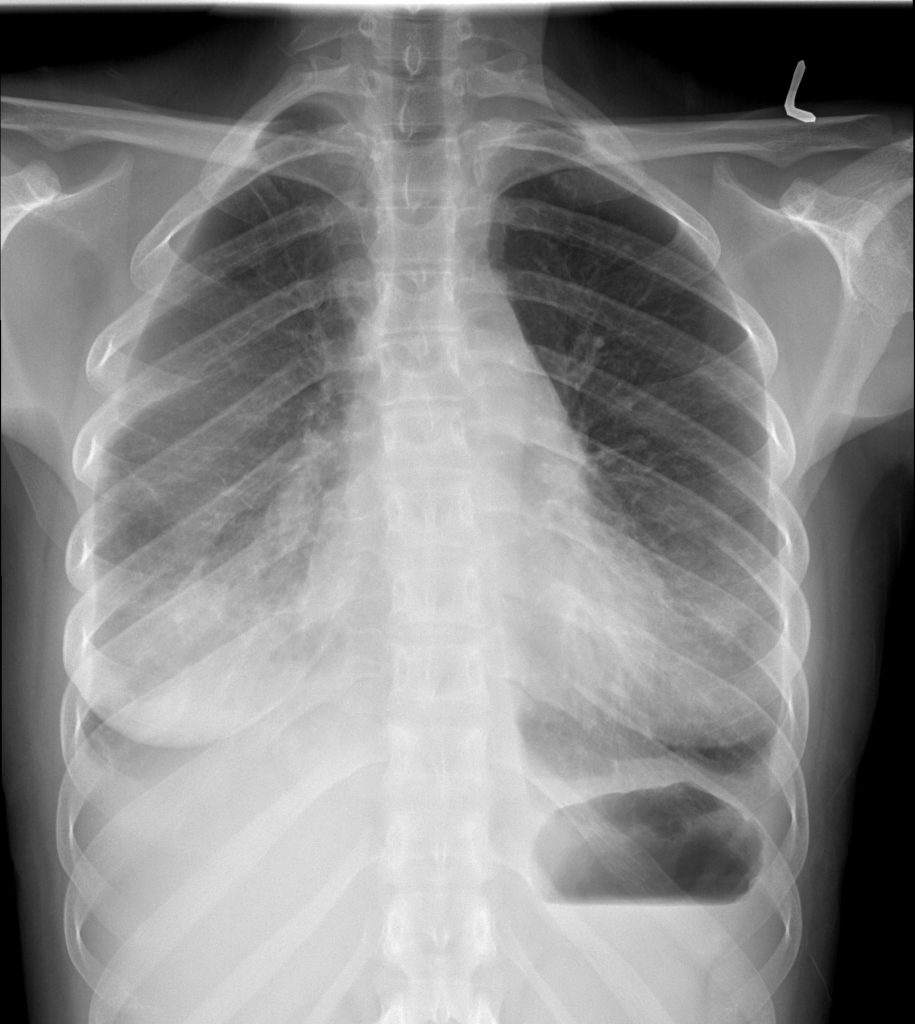
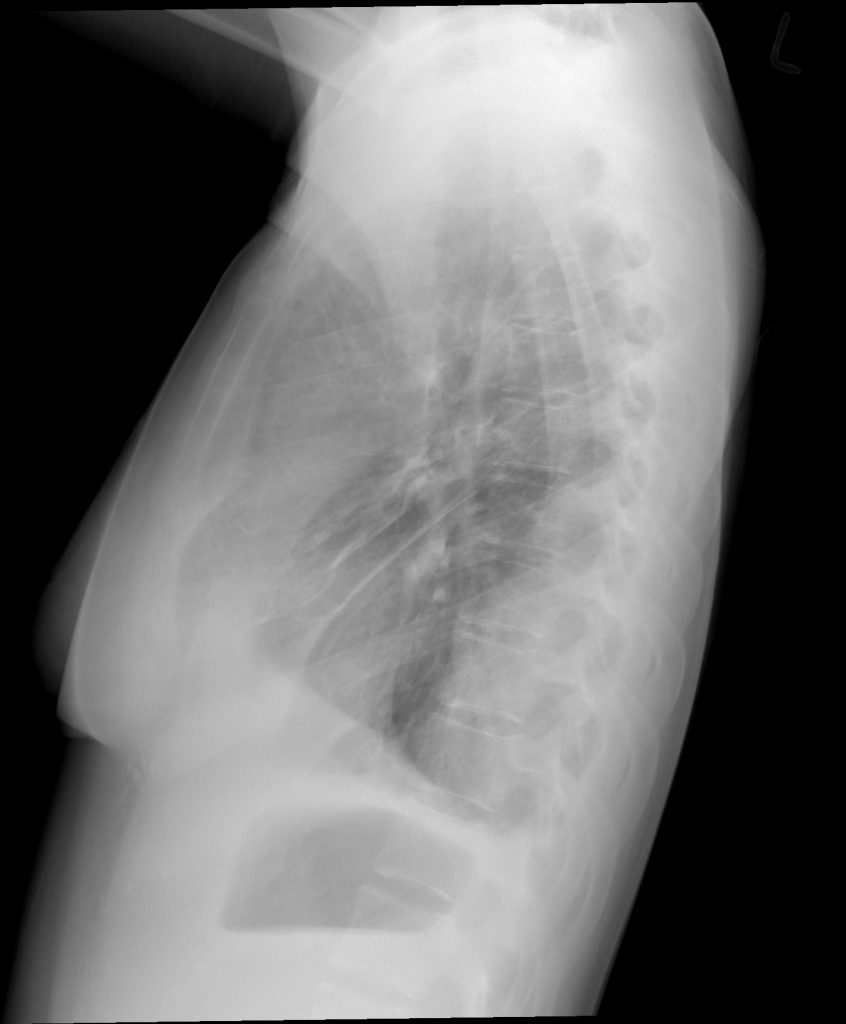
Clinicians were indeed querying a chylothorax. A thoracic duct injury was suspected.

Examination

Unfortunately little clinical information is known, as can be seen above. The following table shows the clinical info which has been captured on the respective episodes’ request forms:

      Clinical history for episodes 
< SA03215505 >      ?UTI IN PREGNANCY
< SA03381462 > 03/10/2019     PLACENTA
< SA03466495 > 07/11/2019     MEDIASTINITIS
< SA03466500 > 08/11/2019     MEDIASTINITIS
< SA03466533 > 08/11/2019     MEDIASTINITIS
< SA03467168 > 08/11/2019     MEDIASTINITIS
< XC00366131 >      ILLEG
< SA03467081 >      ILLEGIBLE
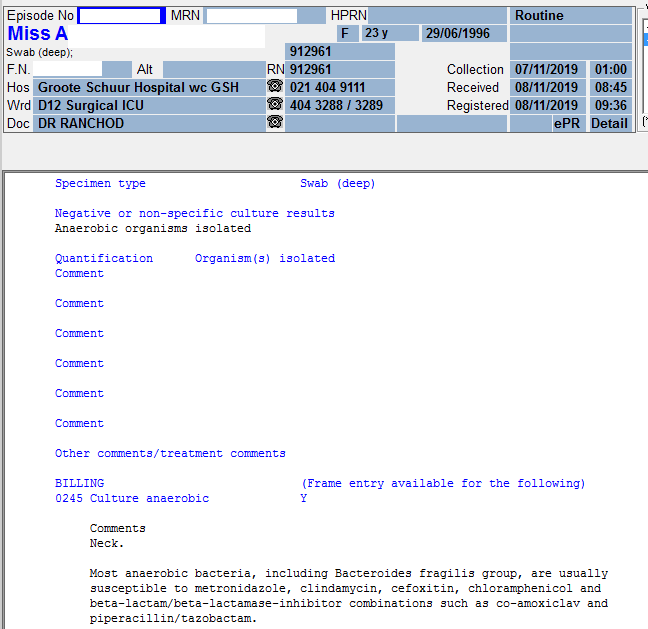
< SA03469305 >      NECK ABSCESS
< SA03469995 >      ILLEGIBLE
< SA03472064 >      MEDIASITINITIS
< SA03470738 >      NECK ABSCESS
< SA03476491 >      PUS FLUID + MEDIASTINITIS
< SA03476496 >      PUS / FLUID + MEDIASTINITIS
< SA03476502 >      PUS / FLUID + MEDIASTINITIS
< SA03476507 >      PUS / FLUID + MEDIASTINITIS
< SA03489396 >      ?CHYLOTHORAX
< SA03485823 >      SEPSIS
< SA03491179 >      NECK ABSCESS
< SA03493180 >      Neck abscess with sepsis.
< SA03494446 >      CVC TIP
< SA03509355 >      LOOSE STOOLS
< SA03513657 >      THORACIC SURGERY
< SA03531013 >      MEDIASTINITIS

Laboratory Investigations

Other Investigations

Final Diagnosis

A pleural fluid triglyceride >1.24 is suggestive of chylothorax.

The additional finding of a thin white layer present on the top of the sample after centrifugation indicates the presence of chylomicrons in the sample, which further supports the diagnosis of chylothorax.

Neck X-ray on 06/11/2019
Chest X-ray PA 06/11/2019
Chest X-ray lateral 06/11/2019
CT chest 11/11/2019
CT chest 11/11/2019
CT scan on 11 November 2019
Chest X-ray 12/11/2019
Chest X-ray Mobile 14/11/2019

Take Home Messages

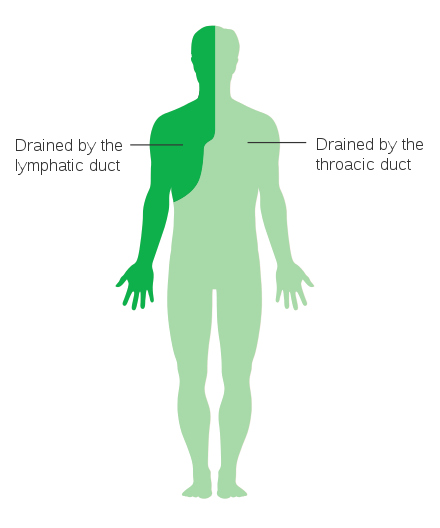
The primary role of the thoracic duct is to carry 60 – 70% of ingested fat at a concentration of 0.4 – 6 g/dl from the intestine to the circulatory system.

  • Chyle contains large amounts of cholesterol, triglycerides, chylomicrons and fat soluble vitamins.
  • Lymph is the other main constituent of chyle and is made up of
    • immunoglobulins
    • enzymes
    • between 400 and 6800 white blood cells/ml, the majority of which are lymphocytes.
  • Chyle transportation is maximal after a high fat meal and minimal with starvation where flow is reduced to almost a trickle.

Classically, a chyloma, a collection of chyle below the pleura develops when the thoracic duct first leaks. Although rarely detected, it manifests itself as a swelling in the supraclavicular fossa which may be associated with severe chest pain, dyspnoea and tachycardia.

Chylomas can also manifest themselves at other sites of the pleura without causing supraclavicular swelling. Eventually the chyloma bursts through the pleura where the chyle accumulates in the pleural space.

Very rarely, the chyle leak may lead to chylomediastinum or chylopericardium.

Roughly 2.4 l of chyle is transported through the lymphatic system every day.

Damage to, or rupture of the thoracic duct can give rise to a large and rapid accumulation of fluid in the pleural space.

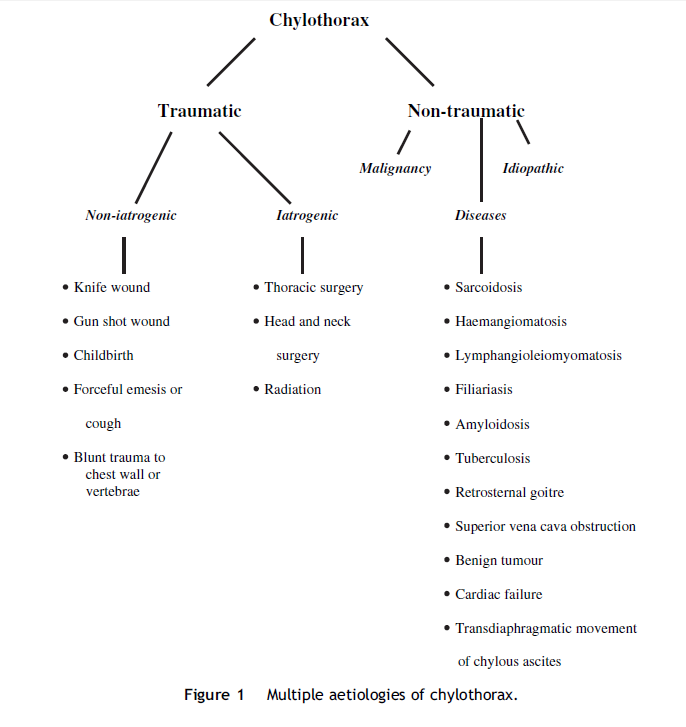
Causes of chylothorax can be classified as follows:

The theorized causes of chylothorax in this case could be one of the following:

  1. The breached stillbirth a month prior to presentation could have caused rupture of the thoracic duct due to increased pressure due to extreme valsalva. Could this be dormant for 1 month and then present with the neck abscess with an anaerobic infection? Could anaerobic bacterial transmission from the gut into a chylous cyst in the neck be the cause? It is however unlikely that delivery of a 750g fetus causes that much trauma.
  2. Iatrogenic chylothorax due to the thoracic surgery.
  3. Left-sided placement of a Central Venous Catheter during delivery of the stillbirth, which accidentally damaged the thoracic duct. The placement of the CVP could also have caused a pneumothorax with subsequent stretching and damage to the thoracic duct.

Remember Chylomicrons float!

DISORDERS OF LIPOPROTEIN METABOLISM - DISORDERS OF THE VASCULATURE ...


ACTH

HOSP # WARD G16 Medical Ward
CONSULTANT   DOB/AGE 54 y Female

Abnormal Result

21/08/2018 Two ACTH tests (referred to another laboratory) and two
Cortisol levels (at our laboratory) were done. 
At first it was thought to be a dexamethasone suppression test, but then
realized the clinicians were suspecting hypopituitarism.

10h05: ACTH 0.7 pmol/L (1.6-13.9)  Cortisol  8 nmol/L ↓  (Morning: 133- 537; Afternoon 68 – 327)

10h35: ACTH 1.8 pmol/L N (1.6-13.9) 
Cortisol  68 nmol/L ↓  (Morning: 133- 537; Afternoon 68 – 327)

Presenting Complaint

? hypopituitarism

History

Known with a pituitary macroadenoma, previously seen at the Radiotherapy clinic in 2016.

Examination

No clinical info available.

For Primary adrenal insufficiency one would expect: Hyperpigmentation
(due to ↑ ACTH), +/- hyperkalemia/hyponatremia (aldosterone effect), +/-
virilization.

For Secondary adrenal insufficiency there is subtle symptoms, electrolytes are not deranged significantly because aldosterone function is preserved. See table on Bishop 7th ed. p. 459.

Laboratory Investigations

Measurement of
plasma ACTH concentration is used to assess Cushing’s disease, adrenal tumors,
ectopic ACTH-producing tumors, Addison’s disease, Nelson’s syndrome, and
hypopituitarism.

The
laboratory diagnosis of hypopituitarism, however is relatively straightforward.
In contrast to the primary failure of an endocrine gland that is accompanied by
dramatic increases in circulating levels of the corresponding pituitary tropic
hormone, secondary failure (hypopituitarism) is associated with low or normal
levels of tropic hormone.  This is the
diagnosis in this case with the history of previous radiotherapy which was
given for a macro-adenoma.

Other Investigations

Free T4 on 19/04/2018 was 7.8 pmol/L (12-22), also suggesting possible hypopituitarism, although a TSH would be helpful.

Final Diagnosis

Hypopituitarism confirmed.

Take Home Messages

Dexamethasone suppression test need only measurement of cortisol, not accompanying ACTH, except in extended work-up however, where a Cosyntropin (CRH) stimulation test can be done to distinguish between pituitary or hypothalamic insufficiency.

Evaluation of pituitary function need the Primary hormone (Cortisol) as well as the tropic hormones from the pituitary (ACTH).