Various auditorial and management tasks has been performed in the laboratory throughout my 4 years. These include but are not limited to:
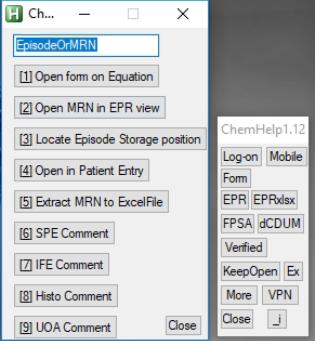
ChemHelp – A script (program) which helps reviewers with the signing of blood results. It consists of various hotkeys, hotstrings and a few buttons which has evolved as our “right hand” when reviewing blood results at Groote Schuur Hospital NHLS. On face value it appears as a small petit application which runs alongside TrakCare, but the time saving is likely to be quite significant. This will likely be a nice additional audit – another project which could be taken on later. Unfortunately the descriptions of the functions of this script goes beyond the scope of this section, so please refer to Section 9.2.4 – ChemHelp SOP or visit: github.com/dietervdwes/ChemHelp (hyperlinks unfortunately are non-functional in a combined and printed PDF).
Screenshot of ChemHelp 1.12 with the “More” menu function expanded.
2. Data extraction tasks for projects and audits – Apart from being involved in an audit in our laboratory, I have been involved in assisting with data extraction via TrakCare’s Results Listing interface. Additionally, I have written a JavaScript extraction tool which has been used (and are being used) in a few studies currently. I have also incorporated into ChemHelp (see above) an automation tool for data extraction via TrakCare’s Results Listing interface. See Section 9.2.
3. Management and advisement of some pre-analytical aspects are sometimes required. As registrars we need to advise and help improve pre-analytical staff’s knowledge through assistance with routine test request queries. We also have a programme where the registrar’s do what we call a “Tech Talk”. These are mainly aimed at technologists but I have also given a talk to an audience including pre-analytical staff on aspects like sample delay, hemolysis and the effect thereof on HIL-indices.
4. Setting up of a referral system – I have set up a referral system for urine steroid profiles in our laboratory. I was involved in identifying the referral lab, setting up the billing codes on TrakCare, with Dr. Heleen Vreede and setting up the canned comments for recording of the results. Invoicing also caused some problems which we had sort out.
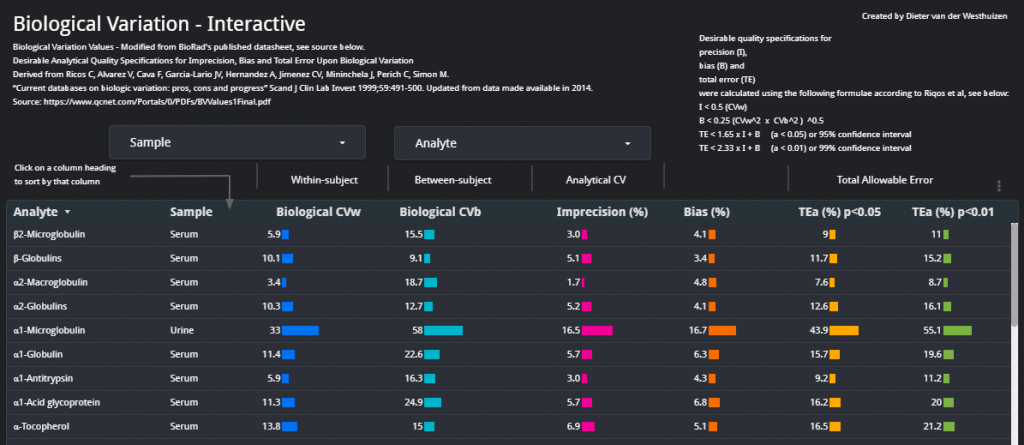
5. TEa Dashboard – I have taken the data from the Riqos et al. study on Biological Variation (updated in 2014) and made an interactive dashboard which we can use when reviewing QC. This dashboard assists in quickly viewing the data visually in a quick-to-access Google Data Studio Dashboard.
Screenshot of the TEa Dashboard – view it at TEa Dashboard ( tinyurl.com/biorad-tae ).
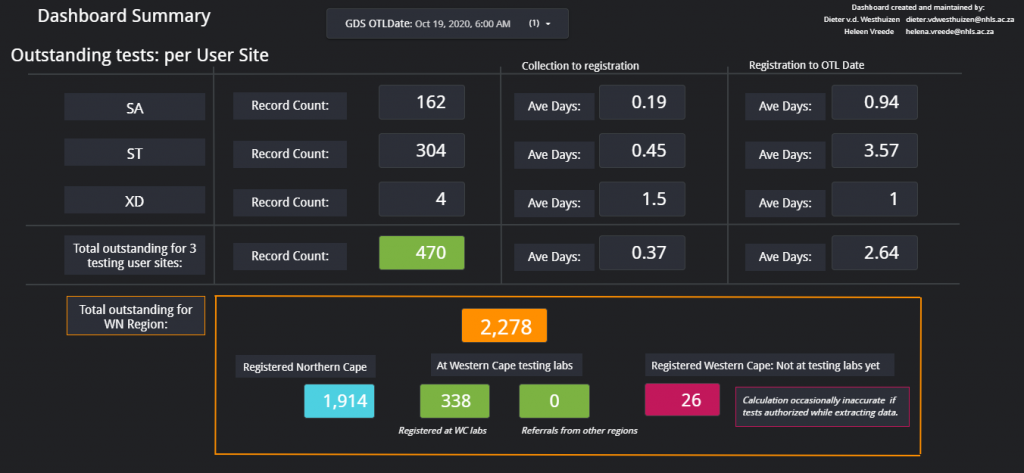
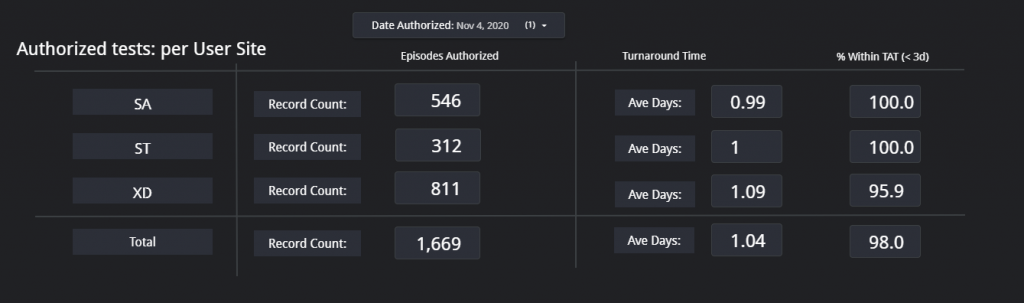
6. COVID OTL Dashboard – During the first COVID Lockdown most of the COVID PCR labs in South Africa were swamped with samples and couldn’t easily keep up with the testing volume. The Department of Health needed info of the back log of samples to be tested. Additionally, the Western Cape Area manager needed information of where the hold-up of samples were in the province. I was contacted as I had some (albeit limited) experience with databases and dashboards. The aim was to make a dashboard which could effectively track delayed samples, count them between centres and also determine where possible hold-ups were. With Dr. Heleen Vreede we set up automated data extractions on TrakCare (every 12 hours at 07h00 and 19h00) and made it such that the data extractions could be loaded onto a Google Sheets Database where Google Data Studio would get the data to calculate the respective counts and average outstanding times. This was done for the 3 COVID testing laboratories in the Western Cape at the time: Groote Schuur Hospital laboratory, Tygerberg laboratory and Green Point laboratory. There were various functions and calculations in this dashboard, with 4 large tables in a database. The dashboard also had various pages, each of which could be used for a specific query. Although not entirely focussed on Chemical Pathology, this project has learned me much about data science in general. As an example, two screenshots of the first page are shown below. The dashboard can be viewed at: WC OTL Dashboard – tinyurl.com/COVID-WC-OTL
Summary Dashboard 1 – Outstanding test items per testing user site.Summary Dashboard 2 – Turnaround time for COVID samples at each of the 3 testing user sites, SA (Groote Schuur Laboratory), ST (Tygerberg Laboratory), and XD (Green Point laboratory).
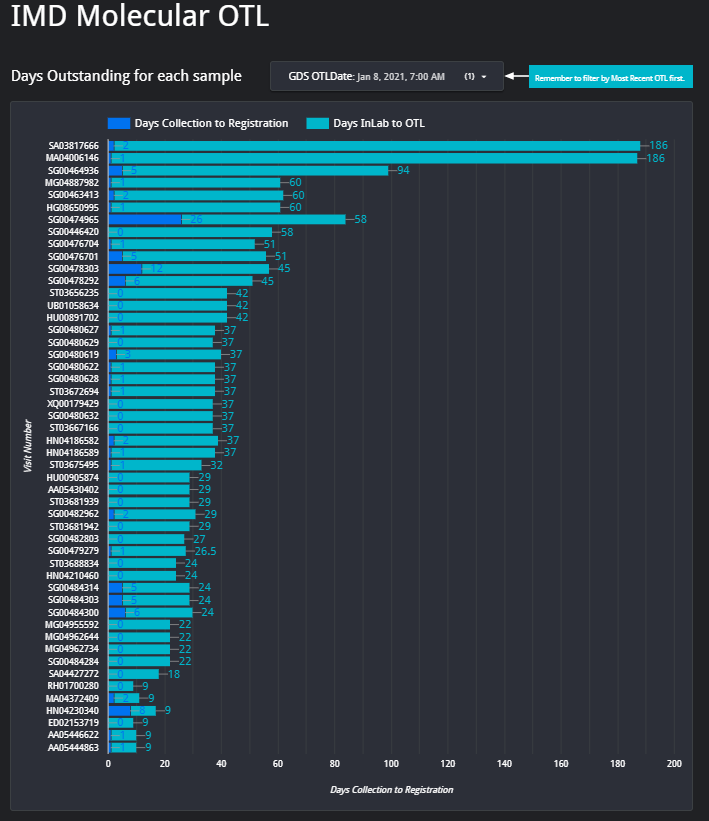
7. IMD OTL Dashboard – From above Dashboard, I was then approached by Surita Meldau, our IMD Genetics Laboratory Head to assist with the IMD Genetics’ lab OTL’s to try come up with a solution to easily track the most outdated samples for the planning of which samples to prioritize each week. We then implied the same principles of above COVID dashboard, into this IMD OTL Dashboard. The result was an interactive portal where we can view information such as patient name, surname, requesting hospital and type of genetic test, all on one platform. The reports are not generated 12-hourly as in the COVID dashboard, but weekly every Friday morning.
8. Transcribing results to TrakCare from CSV in an automated way – With the rapid ramp-up of COVID PCR and antibody testing, there were a few problems initially, which ranged from TrakCare database problems when the new test sets were created, billing problems and analyzer-to-LIS-interface problems. A few times I needed to assist with a few thousand results which needed to be removed and re-tranmitted or entered onto TrakCare. Soon I wrote a script which we could run on a computer, and later on a few computers at once to do the data entry onto TrakCare in an automated way from a CSV results file. This script has no SOP, but is hosted on Github is the need arrises again to use it. It is customized to the applicability at every instance.
Section 7.4 – Method Verification
Introduction
A new analyzer (Diasorin Liaison) was aqcuired by the Virology Department at GSH.
In summary: since the Diasorin Liaison has the capability to do various chemistry analyses too, we were able to “piggy back” on the analyzer’s acquisition and install / setup various chemistry analytes too.
We have decided to introduce:
Aldosterone
Renin
IGF-1
Growth Hormone
C-peptide
I was given the task to specifically concentrate on aldosterone as method verification.
Points which will be discussed:
Rationale for implementation of Aldosterone and Renin
Medical decision limits
EP15-A3: 5×5 method for precision (and accuracy) determination
Method comparison study
Rationale for implementation of Aldosterone and Renin
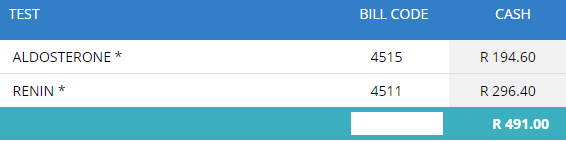
Our previous practice was to send aldosterone and renin results to a private laboratory (PathCare).
Table 1 – price for both assays at Pathcare. According to the service level agreement between the NHLS and Pathcare, tests are billed cheaper at a fixed rate, but this is a bulpark of the cash price billed as per Pathcare web site (url: https://www.pathcare.co.za/fee-lookup-2/ , accessed 22/04/2021).
Virology had planned to budget for a new analyser to run a few of their Virology serology assays. Their test volumes, for the assays on their analyser hasn’t been high enough to adequately motivate for this new analyser.
The auto-analyser which we use (Roche COBAS 6000), doesn’t have a repertoire of Aldosterone and Renin.
Since we had already sent roughly 30 samples for both aldosterone and renin to Pathcare per month, this was a great opportunity to partner with the Virology department in a mutual tender for an instrument which could run their serology assays and our Aldosterone and Renins. Additionally we added some other tests to the repertoire for tender of tests which we were also sending to Pathcare: IGF-1 and hGH.
Together with the anticipated virology serology tests, the total test volume was such that we could motivate to the business manager at GSH for a “break-even” scenario with regards to Cost vs. Income.
The tender was then awarded to the company supplying the Diasorin Liason analyser (as a placement option for 5 years), upon which I was given the task of doing the method verification for aldosterone.
The prior CLSI EP15 A2 document described the following:
Clinical and Laboratory Standards Institute (CLSI) document EP05-A2 describes the protocols for determining the precision of a method. The precision of a method should be tested at at-least two levels; each run in duplicate, with two runs per day over 20 days. It also describes the protocols that should be undertaken by the user to verify precision claims by a manufacturer. Precision claims by a manufacturer should be tested at at-least two levels, by running three replicates over five days.
Excerpt – CLSI EP15 A2 2
Medical decision limits
The medical decision limits chosen were:
EP15-A3: 5×5 method for precision (and accuracy) determination
In the NHLS, a method verification currently happens according to guidelines as per CLSI EP15-A3 document: “User Verification of Precision and Estimation of Bias” provides a simple experimental approach to estimate a method’s imprecision and bias. 1
The objective is to determine if the laboratory precision performance of repeatability and within-laboratory imprecision are in accordance to the manufacturer specification claims.
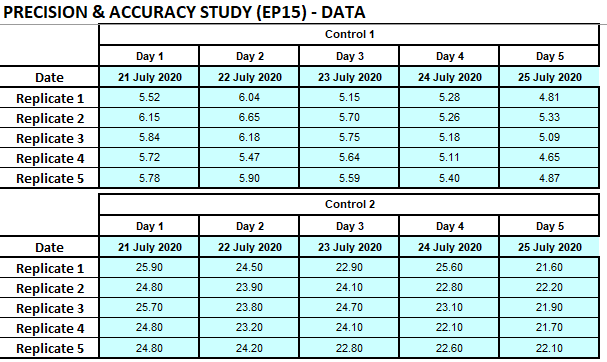
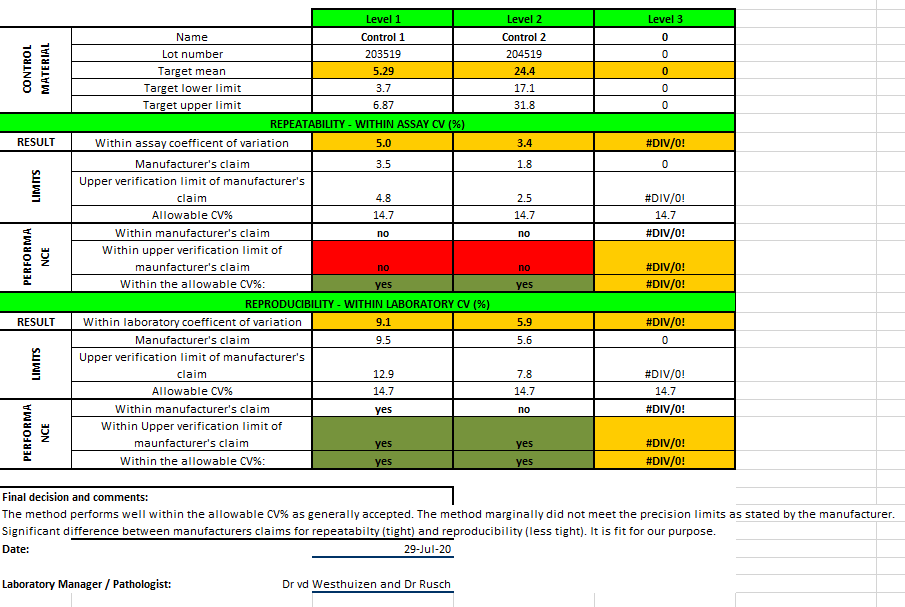
Aldosterone was performed on the Diasorin Liason. One QC lot was obtained for QC of the assay after maintenance and another QC lot (with a different assigned value) was used as the testing material. Quality control (QC) levels (L1: 5.25; L2: 21.10 ng/dL) (Bio-Rad Laboratories, Irvine, CA) were used. Each QC level was measured before and after instrument. Five replicates of the testing material was done per run, one run per day, and during 5 days. Imprecision estimates were calculated by one-way analysis of variance using Microsoft Excel on a template sheet developed previously by Dr Fierdoz Omar. Estimated imprecision was compared to the manufacturer’s stability claims and desirable imprecision specifications based on biological variation.
The aldosterone assay was found “fit for purpose” although not meeting all the manufacturer’s claims.
The literal description of “fit for purpose”: (of an institution, facility, etc.) well equipped or well suited for its designated role or purpose.
This assay, even though not meeting the manufacturer’s claims, performs well within the published “Desirable Analytical Quality Specifications for Imprecision, Bias and Total Error Upon Biological Variation”.
In the process of this project and every day IQC, I have also developed an interactive portal with the desirable analytical quality specifications as per Ricos et al.: TEa Dashboard
References
Jose Jara Aguirre, MD, Karl Ness, MLS, Alicia Algeciras-Schimnich, Application of the CLSI EP15-A3 Guideline as an Alternative Troubleshooting Tool for Verification of Assay Precision, American Journal of Clinical Pathology, Volume 152, Issue Supplement_1, October 2019, Page S88, https://doi.org/10.1093/ajcp/aqz117.007
Desirable Analytical Quality Specifications for Imprecision, Bias and Total Error Upon Biological VariationDerived from Ricos C, Alvarez V, Cava F, Garcia-Lario JV, Hernandez A, Jimenez CV, Mininchela J, Perich C, Simon M. “Current databases on biologic variation: pros, cons and progress” Scand J Clin Lab Invest 1999;59:491-500. Updated from data made available in 2014.Source: https://www.qcnet.com/Portals/0/PDFs/BVValues1Final.pdf
Section 7.3 – Audit
The following poster has been presented at a Congress Pathcape in 2018 as a result of this audit. It also summarizes the work that has been done.
Is an updatable online database of clinician contact details the answer?
DJ van der Westhuizen, J Cole, R Dalmacio, EJ Gantana, JA Rusch, HW Vreede Division of Chemical Pathology, University of Cape Town & Groote Schuur Hospital, National Health Laboratory Services
Background
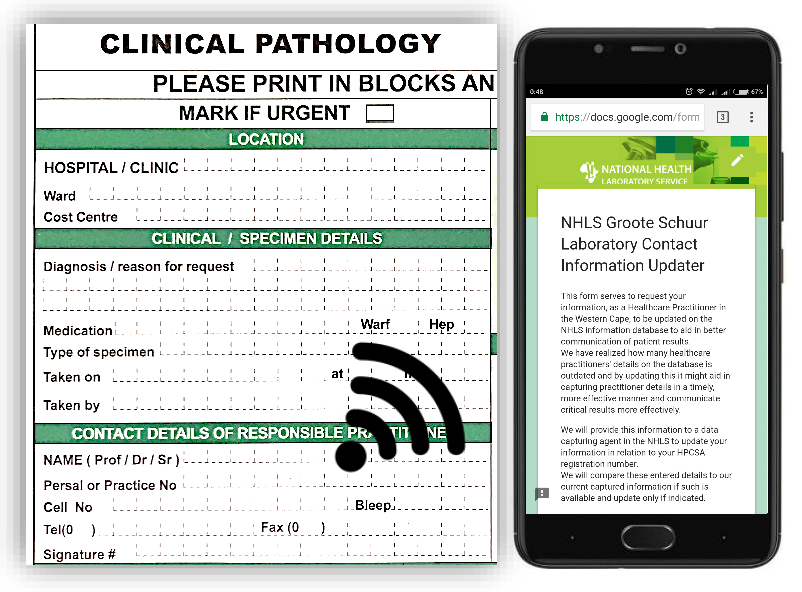
As a result of omission of contact details on laboratory request forms, laboratory personnel frequently spend excessive time attempting to reach responsible clinicians regarding patient results. Poor completion of request forms was previously established in our laboratory as well as at the nearby Tygerberg Hospital NHLS.1 An online web form was created in our laboratory that allows clinicians to update the contact details linked to their professional registration number
Objective
This audit is intended as a proof of concept that the proportion of clinicians that are readily contactable would significantly increase should a system that links professional registration numbers with valid contact details be implemented.
Method
All request forms for the Core Laboratory of Groote Schuur Hospital (encompassing chemistry, haematology, immunology and virology) over a two-day period were scrutinised to determine the proportion of clinicians that provided their contact details and HPCSA registration numbers. The completeness of other clinically and analytically relevant fields was also recorded. Request forms received from all hospitals and clinics in our catchment zone were included.
Results
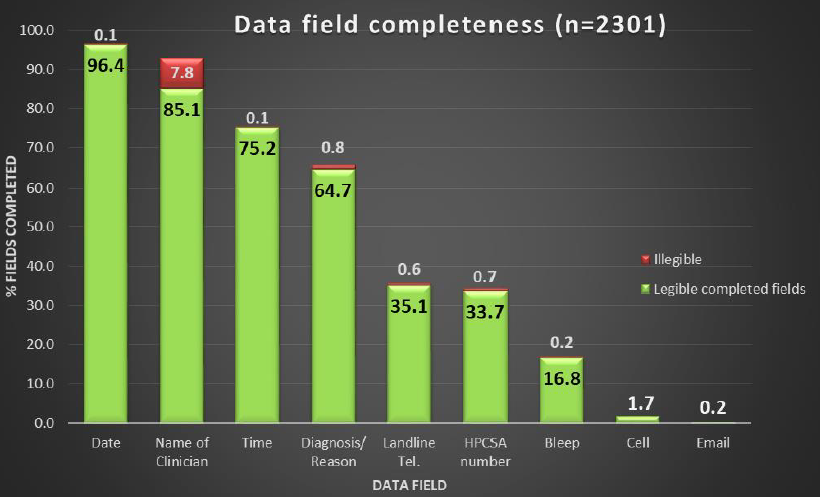
A total of 2301 forms were analysed.
Personal contact – and pager numbers were absent on 81.6% of forms.
The ward or clinic contact number was absent on 64.3% of forms.
Of the 34.4% of forms which exhibited an HPCSA registration number, 41.1% lacked a personal contact number and pager number.
Of all forms from local clinics, 46% provided no contact number.
Specimen collection time was absent in 24.7% of forms.
Collection date was absent in 3.5% of forms
Clinical details was absent in 34.5% of forms.
Conclusions
The vast majority of clinicians do not provide personal contact details for the communication of critical laboratory results. This audit illustrates that a significant improvement may be made were clinicians able to maintain their contact details on an online form that links these details with their professional registration number. Such a form has been created and awaits approval by the NHLS executive. Should it be approved, it will be made available to clinicians in the Western Cape who are served by the NHLS. After sufficient time has elapsed, an audit can be undertaken to monitor the effect of this intervention.
References
1. Nutt L, Zemlin AE, Erasmus RT. Incomplete laboratory request forms: the extent and impact on critical results at a tertiary hospital in South Africa. Annals of clinical biochemistry. 2008 Sep;45(5):463-6.
Section 7.2 – Research Involvement
Research involvement by candidate
MMed Research Project Title: An HPLC-based method development for GFR determination using Iohexol clearance Involvement: This project is one of the three examination components of the MMed degree and is a requirement for registration as a specialist with the Health Professionals Council of South Africa (HPCSA). The work must be done independently by the candidate, under the guidance of his/her supervisor. The candidate must demonstrate an ability to undertake research, to read and review literature comprehensively and critically, and to analyse results adequately. The outcomes of the research must be written up in the form of a publication-ready article or a monograph. Details of Project: Please see Section 7.6 – Research proposal.
COVID-19 Related Laboratory Analyte Changes and the Relationship between SARS-CoV-2 and HIV, TB and HbA1c in South Africa. We conducted a retrospective analysis on data of all adults tested for SARS-CoV-2 across our laboratory network in South Africa over a 4-month period. Details of Project: Please see Section 7.1 – Publications by Candidate
Acute Kidney Injury during the COVID-19 Pandemic – Experience from Two Tertiary Centres in South Africa. The aim of this study was to describe the prevalence of acute kidney injury (AKI) in hospitalized patients with COVID-19 in two tertiary centres in SA. Patients admitted to two tertiary centres in SA between 18 March and 31 August 2020 were included in the study. Demographic data, pre-existing comorbidities, admission variables, laboratory data, management and hospital outcomes were captured. Outcomes assessed were the need for acute dialysis, recovery from AKI, discharge and death. I was responsible for extracting and filtering the data from the Groote Schuur Hospital’s admitted patients. I was also responsible for analysing the data for the Groote Schuur Hospital patients. Details of Project: Please see Section 7.1 – Publications by Candidate
COVID Outstanding Test List (OTL) Dashboard The aim of this project, even though not technically a research project as such, but more a data science project, was to create a real-time dashboard, during the heat of the onset of the COVID-19 pandemic, to enable the Virology Department, as well as the COVID Expert Committee to track the outstanding tests in various parts of the Western Cape, as they were referred. This dashboard was updated twice per day, at 6am and 6pm daily, and provided detailed information which could be used to advise area, business, and laboratory managers on the possible locations / bottlenecks in the COVID PCR test process. Details of Project: Please see Section 7.8 – COVID OTL Dashboard or see it in Real-time on Google Data Studio
Variability of the serum electrolytes Calcium, Magnesium And Phosphate in patients With Severe COVID-19 disease (ongoing project) Observations were made that in many COVID-19 cases individual patient’s serum calcium, magnesium and/or phosphate (CMP) results were highly variable. This within-subject variation (CVw) was noted to be vastly in excess of normal biological variation (BV). In some cases for example, phosphate levels exceeded both the upper and lower reference interval within periods as short as 24 hours. Serum CMP results were extracted for adult patients tested positive for SARS-CoV-2 from March 2020 until March 2021 using data as part of routine management. In this project I have used a data extraction script by means of a web scraping technique which I have learned throughout my time as registrarship.
Acute Kidney Disease Incidence in South Africa (ongoing project) The national laboratory services database will be accessed to determine the incidence of AKI in people who have had their renal function checked in South Africa over a ten year period. Patients with impaired renal function will have follow up data assessed to determine if there is an acute element to the renal dysfunction. Should there be renal dysfunction requiring hospital admission the creatinine on admission will be documented. Any prior creatinine will be documented and subsequent creatinines will be reviewed to determine if there was any form of renal impairment on admission or during the hosital stay. In order to differentiate between acute and chronic renal disease a large data set is required to determine the markers. Follow up renal function will be recorded, along with referral to the Renal Service either as an in patient or an outpatient. Follow up creatinine and outcomes will be determined up to one year. Type of admission (medical, surgical, obstetric) will be assessed to determine departmental incidence. The data accessed will be to determine incidence of AKI. The data will be accessed as anonymous data and will be stored on password protected computers. Only the clinicians involved in the study will have access to the data. These data will allow us to determine the trend of acute kidney disease in the last ten years.
Inherited Metabolic Disease Audit at Red Cross Children’s Hospital laboratory (ongoing project) The aim of this project is to describe the inherited metabolic diseases detected at the Red Cross Metabolic laboratory over the last 14 years. A data extraction has been performed on all urine organic acid profiles reported from 2007 to 2021. This dataset includes roughly 18 000 reported urine organic acid profiles, which will be classified into their respective diagnoses.
Creation of a lysis buffer for COVID PCR tests The aim of this project – although not published or written up as such – was to attempt to create a suitable viral lysis buffer for RNA extraction upon the heat of the COVID pandemic in 2020. South Africa had just gone into lockdown and some of the reagents, one of which was the viral lysis buffer, which is used to lyse the viral lipid bilayer to expose the RNA for extraction, had neared the last or so batch and no commercial buffer could be obtained. I created an “expect group” in our centre, where we brain-stormed ideas, collated expert opinions and I set off to create our very own RNAse-free lysis buffer with a suitable surfactant and the works. The virology registrars tested this compared to the commercial extraction buffer which was still available and according to them it performed similarly, without much difference. They were barely able to observe a Ct-value difference in the tested samples, indicative of extraction efficiency. Luckily the supplier was able to obtain the commercial reagent again, which meant our unverified reagent was left on the shelf where it likely will stay until the next lockdown.
ORCHID Study I am involved often in advising prospective researchers on particulars about laboratory tests and ensuring tests are done as best intended. We also try to assure that the pre-analytical factors are put in place to ensure quality results. In this study, which is titled: Obesogenic origins of maternal and child metabolic health involving dolutegravir (ORCHID), I have advised on various aspects where results may be affected: hemolysis which falsely decreases insulin, dilutions possible with our measurement method of C-peptide and measuring limits have been clearly explained.
Section 7.1 – Publications by Candidate
COVID-19 Related Laboratory Analyte Changes and the Relationship between SARS-CoV-2 and HIV, TB and HbA1c in South Africa
Reinhardt Hesse, Dieter van der Westhuizen, Jaya George
We conducted a retrospective analysis on data of all adults tested for SARS-CoV-2 across our laboratory network in South Africa over a 4-month period. Out of 842,197 tests 11.7% were positive and 88.3% negative. The prevalence of HIV was 6.25 and 6.31% in the SARS-CoV-2 positive and negative cohort respectively (p=0.444). However, the prevalence of HIV positive individuals in the critical cohort (9.15%) was higher than in the non-critical group (6.24%) (p=0.011). Active tuberculosis infection was approximately 50% less in SARS-CoV-2 positive than in negative individuals. The prevalence of uncontrolled diabetes was 3.4 times higher in SARS-CoV-2 positive cases, but was not higher in the critical vs. non-critical cases (p=0.612). The neutrophil-to-lymphocyte-ratio, coagulation markers, urea, cardiac, and liver related analytes were significantly elevated in the critical compared to non-critical cases. Platelet count and creatinine concentration did not differ significantly between the two groups. These findings do not support increased prevalence of HIV or tuberculosis in individuals with SARS-CoV-2 infection but do suggest an association of increased disease severity with HIV positive status. Uncontrolled diabetes was positively associated with a significantly higher prevalence of SARS-CoV-2 and our investigation into analyte changes associated with SARS-CoV-2 disease severity supported previous findings of raised inflammatory markers, coagulation markers, liver and cardiac related analytes and urea, but not for creatinine and platelet count.
Acute Kidney Injury during the COVID-19 Pandemic – Experience from Two Tertiary Centres in South Africa
Nina E. Diana, Ismail S. Kalla, Nicola Wearne, Sarah Kariv, Bianca Davidson, Jody Rusch, Zibya Barday, Abid M. Sheikh, Samantha Reiche, Farzahna Mohamed, Sara Saffer, Chandni Dayal, Jacqueline P. Venturas, Jarrod M. Zamparini, Dieter van der Westhuizen, Sean Wasserman, Nectarios Papavarnavas, Linda Boloko, Timothy de Wet, Graham Paget, Adam Mahomed, Sagren Naidoo and Erika S.W. Jones
Background: The first case of SARS-CoV-2 in South Africa [SA] was documented in March 2020. By October, the total cases for the Western Cape and Gauteng Provinces were 331,425 with 8456 fatalities. The aim of this study was to describe the prevalence of acute kidney injury [AKI] in hospitalized patients with COVID-19 in two tertiary centres in SA. Methods: SARS-CoV-2 positive patients admitted to two tertiary centres in SA between 18 March and 31 August 2020 were included in the study. Demographic data, pre-existing comorbidities, admission variables, laboratory data, management and hospital outcomes were captured. Exclusion criteria included age <18 years, pre-existing Stage 4 or 5 chronic kidney disease and prior renal transplant. Outcomes assessed were the need for acute dialysis, recovery from AKI, discharge and death. Results: AKI occurred in 374/1102 (33.9%) patients admitted to the two hospitals. Within the AKI cohort, 91 (24.3%) patients required intensive care unit [ICU] management, and 32 (8.6%) received kidney replacement therapy. Older age (P = 0.001), pre-existing hypertension [HPT] (P = <0.0001) and biochemical evidence of severe disease, including high ferritin, lactate dehydrogenase, d-dimer and C-reactive protein, were significantly higher in the patients with AKI versus those without. AKI Stage 3 had a higher mortality and lower rates of renal recovery upon discharge. AKI was significantly associated with an increased utilization of ICU resources, prolonged length of stay and mortality. Conclusion: This study reports the largest cohort of COVID-19-associated AKI in Africa. Older age, HPT and severe COVID-19 infection were significantly higher in patients with COVID-19 who developed AKI. This cohort had high rates of AKI which was associated with adverse outcomes, including mortality.
A virtual poster was presented at a congress, PathCape in 2018 held in the beautiful town of Stellenbosch at a wine farm. The Audit, which I have done has been used for this poster presentation. The congress was an amazing experience. There were sessions with Prof. Tahir Pillay (University of Pretoria) for exam preparation aimed at specifically the Chemical Pathology registrars, which helped with preparations for the Chemical Pathology part 1. There were also various interesting presentations and case discussions presented from registrars, scientists and consultants in the field of Chemical Pathology (Clinical Chemistry). Some of the most interesting presentations which I could attend, were:
History of HbA1c in diabetes mellitus management – Prof Gillery
Glycated Albumin – an emerging biomarker for Diabetes – Prof Zemlin
Performance of glycated albumin for diabetes and prediabetes diagnosis in a Mixed-Ancestry South African population – Marizna Barkhuizen
Reference interval determination for glycated albumin in a South African population – Marizna Barkhuizen
A case of X-linked childhood cerebral Adrenoleukodystrophy – Tumelo Satekge
Seasonal pseudohyperkalaemia in a temperate climate – South Africa – Ashlin Rampul
The role of Mass Spectrometry in improving the diagnosis and management of Adrenal and thyroid diseases – Prof Soldin
Endocrine Disruptors – Prof Verena Gounden
Conflict resolution- Prof Aye Aye Khine
Spectrum of genetically confirmed mitochondrial disease diagnosed at the UCT/NHLS IMD laboratory over the past 27 years -Surita Meldau
Two unrelated cases with identical genotype suggest underdiagnosis of hyperphosphataemic familial tumoral calcinosis in Southern Africa – Justine Cole
Discordant thyroid function test results in a patient with metabolic bone disease – Doreen Jacob
Identification of pathogenic TP53 and PTEN mutations in circulating cell-free DNA of a patient with triple negative breast cancer – Armand Peeters
A project on which I collaborated with the WITS Chemical Pathology team, Reinhardt Hesse and Jaya George, was selected to be presented as a poster at the international AACC (virtual) conference in December 2020.
The aim of this study was to describe the biochemical and haematological analyte changes seen in COVID-19 patients using South African laboratory data, and to determine the effect of HIV, TB and DM on the risk for acquiring SARS-CoV-2 and the outcomes as measured by intensive and high care admission.
We reported on data for 842,197 individuals, of which 11.7% (98,335) had at least one positive SARS-CoV-2 PCR test, and 88.3% (743,862) tested negative.
Our findings did not support an increased prevalence of either HIV or TB in individuals with SARS-CoV-2 infection but did indicate an increase in disease severity with HIV-positive status. Our findings of clear differences in several commonly measured analytes between the critical and non-critical group suggested that these may be useful in our setting to triage patients.
Key issues, take home messages, clinical relevance, areas requiring further exploration
It is a priviledge to be involved in teaching. I am quoting a well known philosopher, Socrates: “I cannot teach anybody anything; I can only make them think.” Another famous quote by Albert Eintein is: “Ones mind, once stretched by a new idea, never regains its original dimensions”. With this mindset it is that I present tutorials. Even though sometimes there are students who are struggling with some of the concepts, I try to explain it in the simplest way possible, hoping to make a difference.
Since COVID, however, it has for me become a bit more challenging to get the students involved in actively participating. It also is more difficult to guage whether people are understanding a concept without facial expression, as lately most people turn their cameras off. Connectivity difficulties and the high price of data in South Africa are likely some of the contributing factors for this.
Nonetheless, the post-COVID way of teaching / tutoring students will remain challenging, but exciting at the same time. Tutoring students is something which I enjoy much and it comes naturally for me. It also forces one to read up about a topic to know as much as possible there is about it.
TALKS/LECTURES/SEMINARS GIVEN BY CANDIDATE
DATE
TOPIC
EVENT/VENUE
15/05/2018
The life-giving amines (Vitamins) – part 1
Combined Metabolic Meeting
05/03/2019
The life-giving amines (Vitamins) – part 2
Combined Metabolic Meeting
30/03/2021
Renin and Hyperaldosteronism – the renal-(o)-pressor
Combined Metabolic Meeting
19/07/2019
Development of an online results portal for laboratory results during Laboratory Information System (LIS) downtimes
PathReD 2019 conference, Ekurhuleni International Conference Centre, Johannesburg
20/07/2019
ChemHelp App – an automation script to improve reviewing of Trakcare Chemistry & Haematology results
PathReD 2019 conference, Ekurhuleni International Conference Centre, Johannesburg
26/09/2018
Chemical Pathology of Liver Disease
Analytical Staff Teaching (RXH and GSH)
20/02/2019
Renal failure overview
Analytical Staff Teaching (RXH and GSH)
01/10/2019
The Male reproductive system
Analytical Staff Teaching (RXH and GSH)
18/02/2020
Basic metabolic work-up
Analytical Staff Teaching (RXH and GSH)
02/02/2021
Acute Kidney Injury overview
Analytical Staff Teaching (GSH)
23/03/2021
Utility of HIL indices in Clinical Chemistry
Analytical Staff Teaching (RXH and GSH)
Key issues, take home messages, clinical relevance, areas requiring further exploration
Initially, I was anxious when giving a talk in front of an assembly of people. This became better as the field became better known and also as I learned to know more people and staff in the laboratory. One of the principles which I employed to help in giving a talk, which was taught to me by a colleague, Justine Cole, which was quite helpful was to assure/convince oneself of the following facts:
One can only do your best
You will never know everything
When giving a talk on a certain topic, it very likely that one knows more than most other people in the room on that specific topic, so speak to those to whom your topic is new – it will be good revision for the others in any case.
JOURNAL ARTICLES PRESENTED BY CANDIDATE AT UCT MEDICAL SCHOOL
DATE
TOPIC
26/03/2018
Congenital Hyperinsulinism
11/06/2018
TB nano discs in an MS assay to detect biomarkers in pulmonary and extra-pulmonary TB
13/08/2018
ZFN, TALEN and CRISPR
14/02/2019
Calcium stimulation testing
29/04/2019
Disorders of protein folding
20/05/2019
OSCE – Open source capillary electrophoresis and C4D (capacitatively coupled contactless conductivity detector)
20/06/2019
Investigations in disorders of sexual differentiation
29/07/2019
Ecdysteroids as performance enhancers
13/07/2020
Quality assurance – a touch of stats and a lot of common sense
01/12/2020
Machine Learning of plasma amino acid analysis
08/03/2021
History of Iron in Medicine
Reflective learning commentary
Presenting an article on its own is often daunting, especially when one doesn’t have the proper background knowledge on the topic and also to guage the level at which the audience will enjoy articles often differs. This was likely one of the most challenging things in my preparation of Journal Clubs, but luckily this becomes more easily judgeable as one gets to know the terms and concepts in the field. These meetings are held weekly and it represents a great learning opportunity to all listening and especially those presenting. There are often topics presented which one would never even heard of if one hadn’t attended these meetings. The journal clubs has stimulated many of the fields of study in which I then rabbit-holed into studying things in quite particular detail – often at the arguable extreme wastage of time. Nonetheless, preparing for a journal club is still an exciting activity and part of our job.
Section 6.1 – Summary Page
Section 5.6 – Chemical Pathology Tutorials Received
We were very fortunate to receive occasional tutorials from pathologists within our department, as well as from alumni that had moved to private practice. Each pathologist covered a variety of topics but also had special interest areas that they focussed on. Repetition of some of these topics through the years has been very helpful as our insight deepens and we appreciate the relevance of each topic to a greater extent.
PRESENTER
TOPICS
Dr J Stanfliet
Benchmarking, Accounting, Point-Of-Care Testing, Accreditation, Automation, Ion Sensitive Electrodes, Electrophoresis, Enzymology, Mass Spectrometry, Prenatal diagnosis, Tumour, Markers, Vitamins, Haemoglobin, Liver Enzymes, Therapeutic Drug Monitoring, Thyroid Disorders, Clinical Cases.
Dr P Fortgens
Biological variation, Chromatography, Enzymology, Immunoassays, Interference, GIT, Renin & Aldosterone measurement and application, Phaemochromocytoma, Pseudohyperparathyroidism, Requisition and the process of obtaining new analysers
Dr F Omar
Method validation, Quality Control, External Quality Assurance, Interference, Molecular Lab, Bone Disease and Mineral Metabolism, Endocrine Causes of Hypertension.
Assoc Prof G vd Watt
IMD, GIT, Carbohydrates, Renal Function, Paeds Lab Management, Gas Chromatography
Autoverification, Electronic Gatekeeping, Cost Coding, Data Mining
J Pillay
Lab Practicals
S Meldau
Molecular Tutorials
B Southon
Laboratory Practicals: Interference and recovery, Safety in the Laboratory, Good Laboratory Practice, Protein assays Bradford and Lowry, Calculations and Solution Preparation
Section 5.5 – Attendance Certificates
Attendance Certificates for some of the CPD-accredited lectures and tutorials attended are attached in this section.
Section 5.4 – NHLS ECHO Course Content
Pathologists and scientists around the country have set up a video-conferencing-based tutorial programme that allows registrars to benefit from the expertise in all the academic centres.
DATE
TOPIC
PRESENTER
2018/10/02
Examination questions and calculations
Prof TS Pillay
2018/09/25
Learning Objectives and styles
Dr AA Khine
2018/10/12
PCR presentation I
Dr Chantal van Niekerk
2018/10/15
PCR presentation II
Dr Chantal van Niekerk
2018/12/01
Biological variation concepts and applications
Dr SE Nagel
2019/01/15
Chronic Kidney Disease for distribution
Prof Jaya George
2019/03/12
Hyperammonaemia and the urea cycle defects
Prof George van der Watt
2019/05/07
Diagnostic Accuracy presentation
Dr Jocelyn Naicker
2019/05/10
Lipoproteins
Prof David Marais
2019/06/26
Branch Chain Amino Acid Metabolism and IEMs
Prof George van der Watt
2019/06/26
Phenylalanine and tyrosine metabolic defects
Prof George van der Watt
2019/08/23
Likelihood and Odds Ratios
Dr Jocelyn Naicker
2019/08/23
Total Error
Dr Jocelyn Naicker
2019/08/23
Fatty Acid Oxidation Disorders
Prof George van der Watt
2020/02/05
Renal stone – methods –
Dr AA Khine
2020/02/26
Dynamic function part 1
Prof Verena Gounden
2020/06/04
QC and 6 sigma metrics
Dr Sten Westgard
2020/07/08
NICD zoom covid update
2020/07/26
Creating tests on TrakCare and Costing
Dr Helena Vreede
2020/08/11
Metabolic encephalopathy
Prof George van der Watt
2020/09/02
Urinalysis Webinar ECHO.docx
2020/10/22
Lipids and lipoproteins
Prof David Marais
2020/10/22
Uncommon lipid disorders
Prof David Marais
2020/12/08
Cases- COVID pt and Hypocalcemic patient
Registrars
2021/02/02
Vit B12 Deficiency
Prof Annie Zemlin
2021/03/02
Dynamic Function part 2
Prof Verena Gounden
2021/03/23
Vitamin E
Razia Banderker
2021/04/21
Porphyria Diagnosis
Dr Katrien Kruger
2021/04/21
Vitamin B1
Katrien Kruger
2021/04/29
Renal stones part I.ppt
Dr AA Khine
2021/05/03
Glycation
Prof Annie Zemlin
2021/05/03
Hypothesis Testing
Dr Jocelyn Naicker
2021/05/03
Common IEMs in SA
Prof George van der Watt
2021/05/04
Vitamin K Echo Talk 04 May 2021
Dr Thumeka Jalavu
2021/05/13
Webinar Method validation and verification
Section 5.3 – Combined Endocrine and Metabolic Seminars
2018
DATE
TOPIC
SPEAKER
06/02/2018
Posterior pituitary bright spot
Dr. Lyndall Gibbs
13/02/2018
PCOS
Dr. Cole
20/02/2018
Building reproductive networks
Dr. S. Dyer
27/02/2018
Clinical approach to dyslipidaemia
Prof. Marais
13/03/2018
New treatment to type 2 DM
Prof. Dave
20/03/2018
Adolescent care
Ryan Moore
17/04/2018
Ethics: alcohol
Prof. Dave
24/04/2018
Hypoparathyroidism
Dr. Greyling
08/05/2018
Organic acidurias
Dr. Ramcharan
15/05/2018
Life giving amines (vitamins)
Dr. van der Weshuizen
12/06/2018
IAAF regulations
Prof. Dave
17/08/2018
Thyroid imaging
Dr. Kotze
21/08/2018
Diabetes and Coeliac
Dr. Mendes
28/08/2018
Hyperammonaemia and Urea Cycle Defects
Dr. Cole
04/09/2018
Assisted reproduction: Effect on offspring
Dr. Senaya
18/09/2018
A peak beyond the curtain
Dr. Greyling
23/10/2018
Newer insulin analogues
Prof. Dave
30/10/2018
Case presentations
Dr. Abdulla
2019
DATE
TOPIC
PRESENTER(S)
05/02/2019
Acromegaly
Dr. Abdelfadiel
12/02/2019
Precocious puberty: a rare cause
Dr. Mendes
19/02/2019
Snake bite & Envenomation
Prof. Marais
26/02/2019
Anti-Phospholipid Syndrome
Dr. Matjila
05/03/2019
Vitamins -B12 and folate
Dr. van der Weshuizen
11/03/2019
Obesity
Prof. Dave
18/03/2019
Ca, Mg, Pi metabolism in HIV
Dr. J Singbo
25/03/2019
Inherited Metabolic Disease
Dr. Ramcharan
02/04/2019
Hypercalcaemia in pregnancy
Dr. Gcingca
09/04/2019
Case of psychiatric patient wanting to become trans-male
Dr Tshikosi
17/04/2019
Podiatric Pearls for Prompt Wound Healing
07/05/2019
Diabetes type 1 in a neonate
Dr. Jacqueline Mendes
13/05/2019
A case of glycogen storage disease
Dr. R Dalmacio
21/05/2019
Hyperprolactinaemia
Gynaecology
20/08/2019
Secondary Pseudohypoaldosteronism
Dr. Ruan Vosloo
27/08/2019
Biotin interference in immunoassays
Dr. J Lunn
03/09/2019
Endometrial abnormalities
Gynaecology
10/09/2019
Dr. M Carrihill
17/09/2019
Dr. A Ramcharan
01/10/2019
Renal function testing: A lab perspective
Dr. TA Gcingca
22/10/2019
Radiation Oncology: An Overview
Dr. T. Naiker
29/10/2019
Personal Overview of Interesting Cases
Dr. C Greyling
05/11/2019
Case of Disorder of Sexual Differentiation
Dr. J Mendes
12/11/2019
Counselling in Health Care
Ethics
2020
Unfortunately for most of this year no combined metabolic meetings were held as the Clinicians as well as lab personnel were mostly focussed on COVID management.
Munchausen syndrome and factitious disorder: the role of the lab in its detection and diagnosis
C Hudson
14/05/2018
Renal Stones
E Gantana
21/05/2018
UK Visit – Mitochondrial disorders
S Meldau
28/05/2018
CASE:Two cases of hyperphosphataemic familial tumoral calcinosis caused by homozygous mutations in the GALNT3 gene.
J Cole
29/05/2018
Plasma steroid metabolome for diagnosing and subtyping patients with Cushings
C Hudson
11/06/2018
TB NanoDisk, MS-MS in TB diagnosis
D vd Westhuizen
18/06/2018
Case Discussions and Feedback from LASSA
H Vreede and D Marais
25/06/2018
Case – Hyperandrogenism
R Dalmacio
23/07/2018
Apolipoprotein E: Update
D Marais
13/08/2018
ZFN, TALEN, CRISPR – Genetic engineering
D vd Westhuizen
20/08/2018
A phase-3 trial of L-glutamine in Sickle Cell Disease
G vd Watt
27/08/2018
Organophosphate poisoning
R Dalmacio
01/09/2018
Using Machine learning to aid the interpretation of urine steroid profiles
C Hudson
22/10/2018
Network Medicine
J Cole
15/10/2018
Imaging Mass Spectrometry
J Pillay
29/10/2018
Hypercalcaemia: An Approach
T Gcingca
01/11/2018
Lipoic Acid Biosynthesis Defects
S Meldau
18/11/2018
Immune checkpoint inhibitors
C Hudson
2019
DATE
TOPIC
SPEAKER(S)
11/02/2019
Snake envenomation
D Marais
18/02/2019
Case presentation:
R Banderker
25/02/2019
Metabolomics and mortality of naked mole rats.
C Hudson
11/03/2019
Monitoring glycaemic control in individuals and populations
H Vreede
18/03/2019
Cannabis in research
R Dalmacio
08/04/2019
Between Chemistry and Genetics. Based on Carl Zimmer’s book She has her mother’s laugh
D Marais
16/04/2019
Biomarkers in Schizophrenia
J Lunn
29/4/2019
Disorders of Protein Folding
D vd Westhuizen
13/05/2019
Unusual cases of metabolic disorders in 4 neonates
G van der Watt
20/05/2019
Open Source Capillary Electrophoresis
DJ vd Westhuizen
27/05/2019
Hypertriglycaeradimic pancreatitis
TA Gcingca
03/06/2019
Journal Watch
R Dalmacio, TA Gcingca, J Cole, J Lunn, DJ vd Westhuizen
20/06/2019
Short case presentations: DSD, Septic Cholestasis, SPE’s and their various presentations
D vd Westhuizen, R Dalmacio, TA Gcingca
01/07/2019
Journal Watch
R Dalmacio, TA Gcingca, J Cole, J Lunn, DJ vd Westhuizen
08/07/2019
Book Review Part 2: She Has Her Mother’s Laugh. Carl Zimmer
AD Marais
22/07/2019
Flagger and Percentiler: A revolutionary EQA alternative
C Hudson
29/07/2019
Case Presentation: A case of secondary hypogonadotrophic hypogonadism with Ecdysterone supplements
DJ vd Westhuizen
05/08/2019
Journal Watch
R Dalmacio, TA Gcingca, J Cole, J Lunn, DJ vd Westhuizen, J Rusch
12/08/2019
Nanobody development in Chemical Pathology
TA Gcingca
19/08/2019
Book Review Part 2: She Has Her Mother’s Laugh. Carl Zimmer
AD Marais
26/08/2019
Short case presentations: Macroprolactin and High dose hook effect; Urea Cycle defects in neonates at RXH
TA Gcingca, JA Rusch
02/09/2019
Journal Watch
R Dalmacio, TA Gcingca, J Cole, J Lunn
09/09/2019
Vaping vs. Smoking
D Blackhurst
12/09/2019
Short case presentations: Insulin ; Globulin Gap
J Cole, J Lunn
16/09/2019
Energy Metabolism – Micro-organisms metabolising lactate into Crebs Cycle intermediates
G vd Watt
23/09/2019
Immunology overview
R Dalmacio
30/09/2019
Meeting cancelled
n/a
07/10/2019
Journal Watch
D vd Westhuizen; TA Gcingca; R Dalmacio
10/10/2019
Short case presentations: Enzymology in reagents; A case of cryoglobulinaemia
TA Gcingca; D vd Westhuizen
07/11/2019
Short case: Methaemaglobinaemia
R Dalmacio
11/11/2019
Microfluidics in Sweat Testing
J Pillay
18/11/2019
Iron metabolism in microcytic hypochromic anaemia (Iron Lion Zion)
J Rusch
2020
DATE
TOPIC
PRESENTER(S)
30-Mar-20
Case presentations: Transient benign hyperphosphatasaemia; An approach to hyperandrogenism
T. Gcingca; M. Mahomed
20-Apr-20
Book review Part 3: She Has Her Mother’s Laugh. Carl Zimmer
Prof D Marais
30-Apr-20
Case presentations 1) Electrolytes 2) Excess GH: Acromegaly
D Roque, T. Gcingca
11-May-20
Excess GH: Acromegaly Part 2
T. Gcingca
18-May-20
Case Presentation: Hyperalbumineamia
D. Roque
25-May-20
Case Presentations: OTC Case; Chylothorax from Thoracic injury
R. Dalmacio, D. vd Westhuizen
08-Jun-20
Hyperammonaemia
M. Mahomed
11-Jun-20
Case presentations: A World of Colour; A Lack of evidence is not evidence of absence
T. Gcingca, D. Roque
13-Jul-20
Quality assurance in clinical chemistry
D. vd Westhuizen
20-Jul-20
EM Guidance, “Your future depends on your dreams so go to sleep”
Kim Jacobs, J Rusch
27-Jul-20
Case presentations: MSc Project presentation; Porphyria cutanea tarda
S. Lampert; T. Gcingca
17-Aug-20
Dyslipidemia
R. Ateko
24-Aug-20
Anosmia/ Hyperosmia
S. Meldau
31-Aug-20
Case presentations: CSF Leaks; CSF-IgG index
M. Mahomed; C. Francis
14-Sept-20
DKA vs HHS
T. Gcingca
21-Sept-20
Population genetics of the Indian Ocean humpback dolphin (Honours project)
S. Lampert
29-Sept-20
Case presentations: Methanol poisoning; COVID big data project
T. Gcingca; D. vd Westhuizen
19-Oct-20
Vitamin and homocysteine levels correlation with cardio metabolic risk factors
K. Seakamela
26-Oct-20
Case presentations: Galactosaemia; Cryoglobulins
M. Mahomed; C. Francis
11-Oct-20
Myeloma
C. Francis
23-Nov-20
Case presentations: Does this urine make me look fat? Lipiduria and fat embolism syndrome; Critical results
M. Mahomed; R. Dalmacio
30-Nov-20
Machine learning
D. vd Westhuizen
2021
DATE
TOPIC
PRESENTER(S)
08-Feb-21
Epigenetics and Diabetes
J Rusch
15-Feb-21
Interference in Chemical Assays during COVID
R. Dalmacio
22-Feb-21
Case Presentations: High testosterone in female (?) patient; Hyponatremia with urine sodium measurement
T. Gcingca; D. vd Westhuizen
04-Mar-21
Case Presentations: Biochemical features of Pre-eclampsia; Organophosphate poisoning
M. Mahomed; C. Francis
08-Mar-21
Green illness berfore the red carpet – Iron Metabolism
D. vd Westhuizen
15-Mar-21
Malabsorption
T. Gcingca
25-Mar-21
Supplemental nutrition
C. Francis
29-Mar-21
Project presentations
J. Pillay; R. Dalmacio; S. Lampert; S. Meldau; K. Khan
01-Apr-21
Insulin Sensitivity
T. Gcingca
01-Apr-21
Project Presentations
D. vd Westhuizen; C. Francis; M. Mahomed
15-Apr-21
Project presentation
T. Gcingca
19-Apr-21
Fluorimetry
C. Francis
26-Apr-21
Toxic Alcohol ingestion
M. Mahomed
06-May-21
Persistent hypocalcemia
D. vd Westhuizen
10-May-21
The Vital Question: Nick Lane
D Marais
Journal Watch
We have a monthly meeting during which each attendant may briefly present relevant journal articles. Initially, it was left entirely up to the individual what they would present. However, from late in 2017, it was formalised the registrars’ contributions to ensure that the important journals were being covered. These include: Clinical Chemistry, Clinica Chimica Acta, Annals of Biochemistry, Clinics in Laboratory Medicine and Clinical Chemistry and Laboratory Medicine. Registrars are also encouraged to read NEJM, Nature, Cell, Science, The Lancet or any other journals of interest and to present what they feel is relevant. Each month we read and present several articles from at least one of these journals.
This was done on the first Monday of each month, after our departmental staff meeting. Dates are not recorded.
Section 5.1 – Learning Activities
Courses
COURSE
INSTITUTION
DATE
COURSE DIRECTOR
Leadership and Laboratory Management
University of Stellenbosch
02-05/11/2020
Prof. R.T. Erasmus
Manuscript Writing Course Workshop 1: Principles of scientific writing + poster presentations Workshop 2: Proposal writing for ethical approval Workshop 3: Writing up your thesis vs for publication Workshop 4: Finding your academic voice + referencing
UCT FHS Writing Lab
31/07/2019 18/09/2019 02/10/2019
Taahira G Hoosen
Data Analysis in Stata
CESAR: Centre for Statistical Analysis and Research
28-30/11/2018
B. Bello
WildMedix Winter Wilderness Medicine Course
Wildmedix, Wilderness Medical Society
05-10/08/2020
Walther Meyer / Prof Ross Hofmeyr
Lectures
DATE
TOPIC
PRESENTER
02-Aug-19
DIARRHOEA: Biochemistry of diarrhoea
P Fortgens
18-Sep-19
Male reproduction and hypogonadism
C Hudson
20-Sep-19
Pituitary disease
C Hudson
20-Sep-19
Tumour markers and PSA
H Vreede
02-Oct-19
Disorders of female reproduction
C Hudson
07-Oct-19
Adrenal disorders
H Vreede
18-Oct-19
FASD: Alcohol metabolism
G vd Watt
29-Oct-19
Anemia: Iron metabolism
F Omar
30-Oct-19
Anemia: Haemolysis, folate, B12
G vd Watt
11-Feb-20
Obesity & Satiety Pathways
G vd Watt
Workshops
DATE
TOPIC
PRESENTER/ VENUE
REFLECTIONS
05/03/2018
Riqas QC Roadshow
Randox QC/ Protea Hotel, De Waterkant
This was an amazing experience at the beginning of my registrarship. It was an introduciton to EQA and the 1-day workshop included tips on troubleshooting EQA reports and identifying possible caveats.
16/05/2018
Exam Workshop
Prof. TS Pillay/ Red Cross Hospital Laboratory
Learned valuable techniques for studying and approaching exam questions. Some calculations in chemical pathology was discussed. The approach to questions in general in chemical pathology was discussed. The common pitfalls in questions was also discussed.
2019
Siemens Plasma Protein Market Day
Siemens Healthineers / 99 on Kloof Hotel, Cape Town
This was a day where Siemens Healthineers invited us to their “Plasma Protein Market Day” aimed at introducing us to the Siemens Plasma Protein portfolio. Their test repertoire, methods, state of the art machines and laboratory systems was showcased. There was also an interactive questions and answers session where I could see how some of the pathologists in private practice asked Siemens some important questions.
Congresses and Symposia attended
DATE
CONGRESS
REFLECTIONS
Aug 2018
PathCape, Stellenbosch
I was pleased that most people in the exam workshop agreed to some fundamental changes in the exams. The changes are not yet formalised but it seems that the examiners were unanimous.
30-31 October 2018
Red Cross Research Days
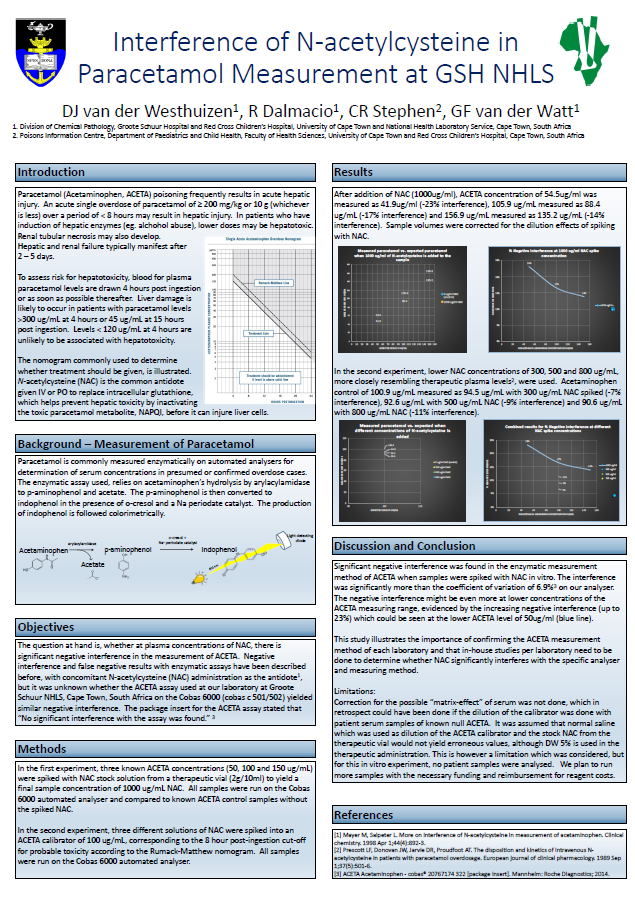
This was two days at the Red Cross Children’s hospital where researchers at the hospital could showcase their work. I presented a poster on an in-house experiment I had done on the interference of N-acetylcysteine on the measurement procedure of paracetamol. This was taken well by the toxicology centre and it aided in the guidelines for paracetamol testing. There were also interesting case presentations and interesting state of the art neuroscience projects presented.
18-20 July 2019
PathRed, Johannesburg
This was an amazing experience to connect with fellow registrars from other centers. Sessions attended was: Developing registrar knowledge, skills and reflection of learning objectives and learning opportunities – Dr. Aye Aye Khine & Dr Rivak Punchoo, Risk Management in the Clinical Laboratory Prof Tahir Pillay & Prof Rajiv Erasmus, Supporting surveillance and outbreak investigation for communicable diseases in RSA – Dr Kerrigan McCarthy (Epidemiology), and a registrar meeting convened by Dr Ashlin Rampul.
Dec 2020
AACC International conference (Virtual)
This congress wasn’t necessarily a trip to San Fansisco as we hoped, but, although virtual, due to the travel and convening restrictions, was one of the most interesting congresses attended. I presented a poster on our findings of a big data project on COVID-19 related laboratory analyte changes and the relationship between SARS-CoV2 and HIV, TB and HbA1C in South Africa. There were interesting talks on Machine Learning, some laboratory management topics, and some inspiring talks about Clinical Chemistry in general. Quite a few topics focussed on testing in SARS-CoV-2, such as an interesting talk on neutralising antibody testing in COVID – all very relevant to Chemical Pathology and very worth while to attend. The time difference from America to South Africa was, however bit of a chalenge as some of the talks I needed to attend at 2AM in the morning. Nonetheless, quite interesting and I could attend these afterhours from work.
Section 4.3 – Chemical Pathology Academic Program University of Cape Town
Section 4.2 – Chemical Pathology Training Manual University of Cape Town
Section 4.1 – Learning objectives and record of rotations
Rotation #
Date January 2018 – February 2018
Initiation
OBJECTIVES
Familiarise myself with the laboratory systems, processes and workflow
Get the know the staff involved and responsible for the various roles
Understand and practice the functions at the various parts of the lab
Learn to perform sample reception, triage, handling of STAT samples, urine toppling
Learn to capture patient data, print labels and label tubes
Learn to prepare samples as necessary and to load them onto the automated analyser
Learn to load STAT samples
Understand the mechanisms and modules on the analyser and what can go wrong
Read manual SOPs, observe and practise manual assays
Read electrophoresis SOPs and learn to run and to interpret electrophoresis
Begin handling clinician queries and learn to troubleshoot pre-analytical queries
Take on learning tasks proposed by consultants
Attend academic meetings and seminars and prepare a journal club presentation
Attend registrar tutorials with consultants
REFLECTIONS
One cannot always get to do everything everywhere. I would like to have spent more time to learn to work the automated chemistry analyser, but this is still the work of the technologists and I have learned a lot from their teachings. It was amazing to learn to know the staff in the lab and build relationships – a good way to find ones feet. I was happy to note that many concepts came naturally to me and I was excited to explore the areas that I didn’t know much about. It was difficult to manage relationships with some of the technologists – but that is understandable as some people in the laboratory have their way of doing things and may be in the way of learning opportinities – especially certain practical tasks. I found my first journal club one of the most daunting experiences ever, however, I enjoyed it.
Rotation #
Date March – June 2018
Lab and Biochem Basics
OBJECTIVES
Understand the methods used in the laboratory and revise relevant physiology from the 3rd year notes
Become more familiar with the assays offered at our lab. Learn about the sample requirements for our assays and those that we send away. Become familiar with referral laboratories and where to send specific assays
Continue learning about the interpretation and verification of routine chemistry results. Find out about extreme values and at what point to investigate further. Troubleshoot suspicious or invalid results
Interpret protein, lipid and CSF electrophoresis traces and gels and understand when to request further testing. Learn about other causes of monoclonal gammopathy and the limitations of the Friedrichson classification of dyslipidaemias
Continue to work at the manual bench, becoming very competent at these assays
Troubleshoot lab issues and lead QC meetings
Learn about IQC and EQA, how to interpret graphs and reports and how to troubleshoot problems
Consult with and assist clinicians with diagnoses and testing queries
Write up and present clinical cases. Read and present research papers at journal club.
Prepare a talk for the combined metabolic meeting
Prepare and present undergraduate tutorials
Continue to attend academic meetings and seminars
WHAT WAS LEARNED
Guide and teach a new registrar in what has been learned so far
Understand Lean Management. Observe and quantify the processes in the analytical laboratory at representative times of day and report back to the Lean Management Project Task Team. Be involved in planning of responses to the findings
IQC reporting was learned and I needed to start leading IQC meetings every fourth week.
REFLECTIONS
Interpretations of electrophores was very interesting in the first few times. I enjoyed following the SOP’s to try to interpret these myself and reading up about the different patterns as well as discovering which patterns are associated with which clinical conditions. A new registrar joined the programme 6 months after I joined, and it was exciting to start teaching a fellow colleague. It was a real difficulty to get accostomed to studying again whilst working full-time. I also enjoyed preparing for undergraduate tutorials – a task in which one likely learns more than the audience you’re giving it to, because it forces you to read up most you can on the topic at hand.
Rotation #
Date July 2018 – September 2018
Red Cross Initiation and Exploration
OBJECTIVES
Work in the sample reception area: learn how to process samples, create a new entry and refer tests
Routine analytical lab: become familiar with the processes, systems and workflow in the lab
Familiarise myself with the routine methods run on the Beckman AU480 analysers
Participate in daily maintenance procedures on the automated analysers
To determine whether N-acetylcysteine (NAC) interferes with paracetamol’s measurement, because of a query that my consultant, Prof George van der Watt, received from the toxicology division.
WHAT WAS LEARNED
Learned to receive samples, data capture, centrifugation, referrals to other labs, handling of special samples, urgent samples and urine samples. Got to know the staff in pre-analytics and developed a good working relationship with them.
Became familiar with the Beckman AU480 analyser and software. Witnessed and was involved in daily and weekly maintenance. Loaded samples for analysis, made dilutions, performed reruns and loaded STAT samples. Verified results on Trak logged storage details after storing samples.
Discussed the importance of selecting an analyser that can perform analyses on tiny volumes, as well as methods employed to allow sampling of minimal sample volumes. This being particular to a paediatric laboratory.
Also observed the use of the osmometer.
Worked in the IMD lab. Read SOP’s, watched assays being done and learned to perform those assays, including glycosaminoglycan screen and thin layer chromatography (TLC), reducing substances and TLC, sweat testing, free fatty acids, pyruvate, ketones, GALT, citrulline, leucocyte cysteine separation for GC-MS measurement
I did an experiment to show the interference of NAC on paracetamol measurement
REFLECTIONS
WHAT REMAINS TO BE LEARNED
Rotation #
Date October 2018– April 2019
Groote Schuur NHLS Chemistry + Part 1 Exams
OBJECTIVES
Gain competency in electrophoresis interpretation.
Continue learning about our assays and methods, including pros and cons and reasons for the decisions that have been made regarding which analytes to test, and which assays to use.
Prepare for Part 1 examinations
Learn to troubleshoot problems picked up in IQC and EQA. Understand EQA programmes and alternatives
Learn method validation and practice aspects of this in the laboratory
Learn calculations in laboratory chemistry and practice these (especially important for part 1 examinations and in practice)
WHAT WAS LEARNED
Gained competency in serum protein electrophoresis interpretation and improved my level of competency in interpretation of urine protein electrophoresis and lipid electrophoresis
Had the opportunity to observe a CSF electrophoresis for beta-2 transferrin one evening when a colleague was on call, which was a valuable opportunity to become familiar with the instrument and method
Studied the Westgard rules and started to feel more competent regarding the theory and practice of IQC and EQA and the troubleshooting of violations or poor performance. Felt more involved and interested in meetings due to the improved awareness
Spent time studying and practicing calculations, which enhanced my understanding and appreciation of some of our methods and results that we release.
In enjoyed applying maths in the biostatistics, which was applicable to my studies of method validation
I started engaging more with decisions regarding method selection for the laboratory and diagnostic algorithms e.g. for Cushing’s syndrome
The focused preparation for the part 1 exams brought a lot of clarity to topics and functions that had previously been neglected in a certain sense, or perhaps not well understood due to lack of insight in the bigger picture, but I still saw room for improvement in this aspect
Attendance at interdisciplinary meetings and ward rounds, and preparation of seminars and presentations, broadened the holistic view of our role in patient care and the clinical pathway
WHAT REMAINS TO BE LEARNED
• After part 1 exams, I needed to start broadening my knowledge to include non-routine aspects of laboratory practice and areas of special expertise offered by us and other centres • I needed to deepen my understanding of the routine analytical methods employed by us and others, their benefits and limitations • I had to start focus more on management topics and issues – which will be covered in a further rotation and a management course attended at Stellebosch University.
Rotation #
Date May 2019 – June 2019
Red Cross Continued Rotation
OBJECTIVES
Work alongside technologists in the IMD lab
Read SOP’s for assays run in the manual lab and try to understand the biochemical and analytical principles behind steps in the methods
Observe assays being performed and assist by performing assays when needed
Understand GC-MS in more detail and watch and understand maintenance procedures
Study basic practical lab equipment, principles and techniques
WHAT WAS LEARNED
Observed metanephrine and organic acid extraction for GC-MS measurement
Assisted technologists by performing assays and making up buffers and reagents
Began work on a TSH newborn screening assay for detection of congenital hypothyroidism
I learned how to do an ELISA, from lots of reading, Youtube videos and articles on the topic, trying to optimize the TSH ELISA which we have ordered from abroad.
I learned how to use two plate readers and how to program the automated Berthold Tristar2 Multimode Reader LB 942
REFLECTIONS
I enjoyed this rotation as it felt that I’m “making a difference” in a way. I also developed an AutoHotkey script to assist with the transcription of urine and plasma amino acid quantified results from CSV (Excel) to Trakcare as these were still typed in for each patient after the runs – a fairly laborious manual task. I needed to learn various coding features such a looping and parsing files – which I’ve used in further developed scripts and data analyses with quite good success.
WHAT REMAINS TO BE LEARNED
Better understanding of IMD’s and sufficient knowledge should still be gained to assist witht he interpretation of urine organic acids – especially when the consultant is on leave
To obtain a broader knowledge, to be able to advise clinicians on the tests which we perform at Red Cross Hospital NHLS
Rotation #
Date July 2019 – July 2020
Groote Schuur Hospital NHLS Chemistry Clinical (the COVID stretch)
OBJECTIVES
Contact special labs: porphyria, immunology, pharmacology, forensics, toxicology to gain some exposure and knowledge to these areas of laboratory service to which we are not routinely exposed
Focus on journal articles and reviews to become knowledgeable and up-to-date on the current controversies and conversations about current and new assays or practices
Attend the Stellenbosch University Laboratory Management course and study laboratory management principles
Try to complete MMed and get up to date with portfolio work
WHAT WAS LEARNED
Learning point/area 1
Learning point/area 2
REFLECTIONS
How did this experience shape you as a pathologist?
What new insights did you have about the job and life of a pathologist?
Did you face any situations relevant to ethics?
What did you learn about yourself as a pathologist?
Etc.
WHAT REMAINS TO BE LEARNED
Next time you come to this rotation or in general
Rotation #
1 August – 17 October 2020
Red Cross Hospital Chemistry
OBJECTIVES
Do Thin Layer Chromatogram
Osmometer TE calculation and assist with Quality Assurance thereof
Total Error (allowable) calculations and quality assurance of chromogranin A and Procalcitonin on the Kryptor immunoassay analyser
Turnaround time calculation (TAT) form a data extraction (“Results Listing”) from Trakcare and assisting with finding a reason for TAT failure on certain samples
Sweat Test Quality Assurance and EQA programme assessment and advice
WHAT WAS LEARNED
TLC
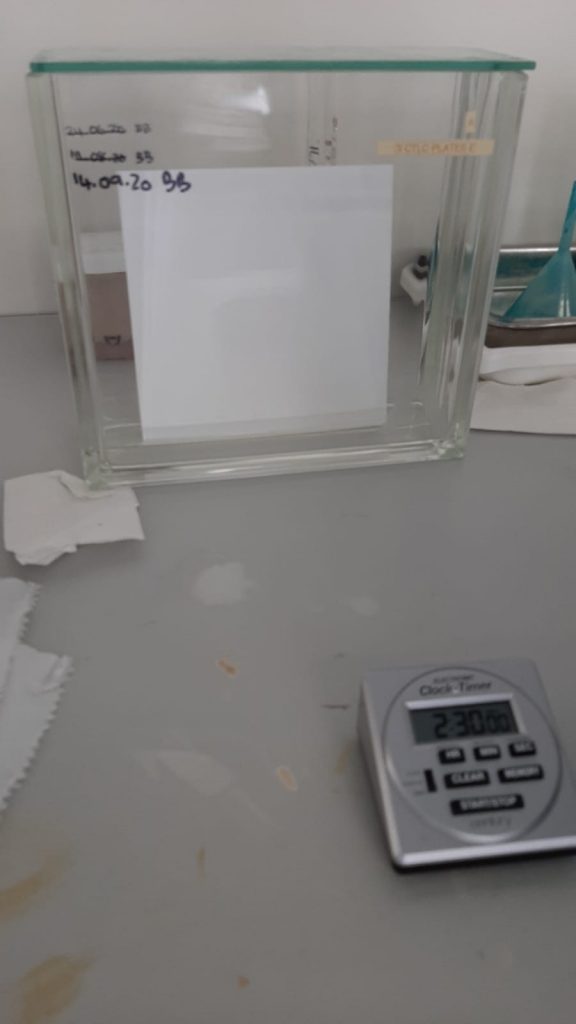
It was good to do a TLC again. I had done this previously too, but haven’t adequately documented and taken pictures:
TLC plate after blotting and drying samplesTLC running (2.5 hours)TLC result
The Osmometer problem
The osmometer at Red Cross Hospital lab had broken and needed to be replaced. The part which had broken (a probe) was out of manufacture / not easy to source according the suppliers. It happened just after Groote Schuur Hospital lab had received a new osmometer, hence the older working one from there could luckily be used temporarily. Nonetheless, there haven’t been any TE error calculations done on the new or the old osmometer’s QC readings, which I had done. The technologists suspected that the error on the old osmometer was too high and we needed to decide whether it is worth trying to fix it, or replace it with a new osmometer.
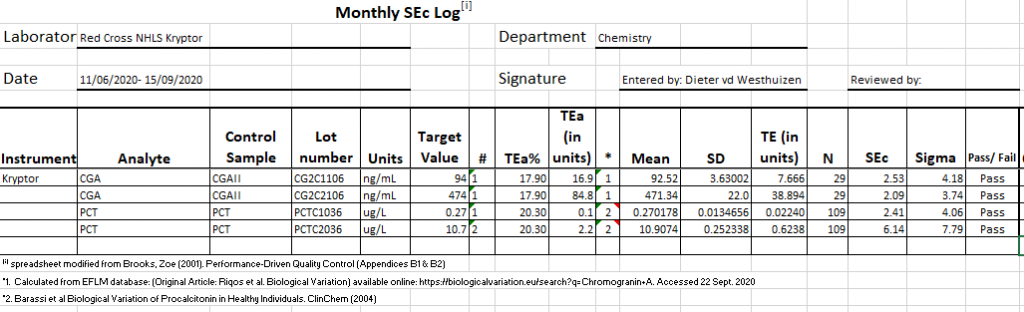
CV (and total error) on PCT and Chromogranin A
The CV of the two analytes above needed to be filled in an reviewed. Data for PCT wasn’t available on the EFLM Biological Variation web site, so a literature search was performed to get an estimate.
Example of Spread sheet populated.Table from Barassi et al. Biological Variation of Procalcitonin in Healthy Individuals. ClinChem (2004).
Turnaround time calculation (TAT)
The two columns in green in the Excel Sheet was created to calculate TAT from a regular results listing extract:
Example of Excel Sheet’s appended columns (columns BA – BE)
One can play another two or so hours to get the days’ difference in hours and time’s difference in hours into one column, but it’s not particularly easy for me to work with times and dates in Excel.
Also, I know the Technologists at GSH has requested a data extract from Mr. Thomas Papo at CDW when calculating TAT. It works better I think since it’s already nicely formatted and calculated the TAT in a separate column.
Sweat Test Quality Assurance and EQA programme
Since the dilution factor is 1:5, whenever the analyzer gives a result of 1mmol/L more or less than actual, which happens quite often acc. to the bell curve of normal distribution, one’s calculated result differs by 5 mmol/L. As a result we have now failed our new EQA from Riqas quite far.
To see it in real time on the sheet, change the value in yellow with one unit and observe how the value in blue changes with ~5mmol/L. Our analyzer cannot give a result in decimals.
Ways I could think of to change this issue was:
use a dilution factor of 1:3 or even smaller or measure the diluted sample few times to get an average.
use a dilution with an analyte which has no chloride and sodium in it.
In the end it was decided to not do a smaller dilution (as is done by Tygerberg hospital’s Chemical Pathology lab), but rather stick to the method as it is currently. The results are as such that it will not negatively impact patient results. It is not clinically significant and the grey area where sweat testing needs to be repeated according to the guidelines are large enough to not affect the sensitivity due to this resolution issue of 5mmol/L (1mmol/L on the analyser).
We decided to measure the analyte in future neatly on the analyser for EQA purposes and not put it through the same dilution and / or extraction procedure as a normal patient sample would go through.
REFLECTIONS
How did this experience shape you as a pathologist?
What new insights did you have about the job and life of a pathologist?
Troubleshooting is our Job. We need to help with and implement Quality Assurance processes as we go. Quality Assurance is a continuous task with various concepts which needs to be mastered before one gets good at it / understand it.
What did you learn about yourself as a pathologist?
I love statistics. I love maths. I love computer science. I love Chemistry. It inspires me to put the concepts I am learning together to create value and “create and maintain” quality in the lab, if one could say it so proudly.
Other tasks performed:
Took on interesting cases and researched methods to confirm or support diagnoses, including a toxicology case (GHB poisoning) and metabolic encephalopathy
Consulted with clinicians asking for relevant clinical information to help make IMD diagnoses and advised about management
Started to learn to interpret urine organic acid, and plasma and urine amino acid profiles. Interpreted this work when the consultant was on leave – which would be reviewed when he returned.
WHAT REMAINS TO BE LEARNED
ELISA TSH assay to be perfected / development completed when I graduate
More about IMD’s in general
More about GC-MS and the analysis of urinary organic acids – this takes much time and experience to master / learn.
Rotation #
Date July 2020 – October 2020
Inherited Metabolic Disease – Molecular Biology Rotation (overlapped slightly with my previous Red Cross Rotation)
OBJECTIVES
Revise genetic methods
Read and understand the genetics lab general SOPs and the TPMT assay SOP
Watch and learn to perform the TPMT and ENAC assays, paying special attention to precautionary procedures to prevent contamination
Perform TPMT and ENAC assays independently
WHAT WAS LEARNED
Read all the relevant SOPs for the molecular lab
Refreshed the importance of the workflow and avoidance of contamination in the molecular lab
Gained skills in accurate pipetting and avoidance of contamination whilst working
Gained knowledge of molecular methods, learned to perform the TPMT and ENaC PCR assays and became familiar with running an agarose gel, as well as using the computer software to document the results, entering them and doing the billing on TrakCare.
Discussed sequencing and planned to sequence the exons of a gene for a patient I which were discussed from a peripheral private laboratory.
REFLECTIONS
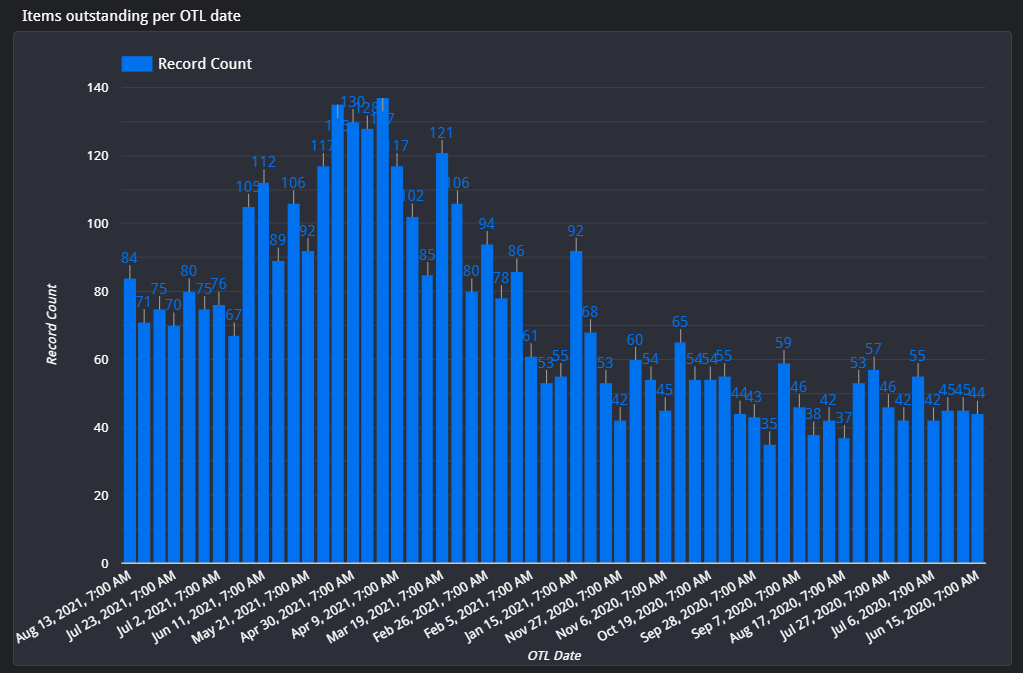
The molecular rotation was likely the most enjoyable of my rotations. It was amazing to learn the basic molecular methods. I have noticed a shortfall in how planning was done in the IMD laboratory. With regards to outstanding test lists (OTL), I have developed a dashboard where these items can be viewed and planned more efficiently. There are outomated OTL’s generated on TrakCare (07h00 every Friday morning). these are then used to import into the dashboard which organizes the tests outstanding by those which are the longest outstanding. It displays additional info from that on the OTL alone, by using a lookup table to see where the samples are from, as well as calculating by how long the sample has been stored already at our laboratory.
WHAT REMAINS TO BE LEARNED
I would like to become more proficient in reporting of genetic reports. There are however limited time for us as registrars to thoroughly learn all the post-analytical reporting skills.
I was also at the molecular rotation during the first wave of COVID, which made personal training challenging.
Full automation of the IMD OTL dashboard would be great. This is however still an issue with a slow and very limited internet connection which we need to cope with at Groote Schuur Hospital
Rotation #
Date 19 October 2020 – 31 December 2020
Management Rotation – Groote Schuur Hospital NHLS
OBJECTIVES
Learn about effective leadership skills
Learn about laboratory organization
Ethical leadership
Learn about budgets
Laboratory Safety
Preventing and managing conflict
Use of Quality management tools
Lean management and quality
Method validation
Six Sigma
Managing a POC service
Extra-analytical errors
WHAT WAS LEARNED
Logistic problems which we have in the Western Cape with regards to referral routes, samples being sent from district clinics to sample depots and the organizing of couriers. Although I wasn’t self involved in the process of streamlining the process, I could see the difficulty in organizing this in the NHLS, in an environment where new labs are opened and staff needs to become informed about the changes which is brought about by new labs and new happenings such as COVID.
EQA, even though being a routine task of us as registrars, was looked at throughout my time in this rotation. We are participating in both Biorad and Riqas’s EQA schemes on some of the assay groups and we have recently moved over to Biorad for our Urinary Chemistry analytes. It is good experience to learn to interpret these charts as they are significantly different and each has its own subtle advantages and disadvantages, although they principally show the same data.
Human Resource management during the COVID-time was experienced first-hand. We needed to plan actively with the available staff during the pandemic, both to prevent infection of our staff as well as to plan the isolation of infected staff. This involved tasks such as calling infected patients (staff members) and close contacts, keeping schedule of those contacts and being in a position between patients and the laboratory managers, trying to meet both’s needs.
TAE review: With Dr. Jody Rusch being on leave during some of this time, I was given the task of reviewing our month of December 2020’s TAE sheet. This is a summary of all analytes’ IQC values during the month upon which we comment on the analytes which failed TEA.
REFLECTIONS
How did this experience shape you as a pathologist?
Management skills are not necessarily learnt on paper but by jumping into the deep end. One will not learn management skills effectively by just learning the theory behind it. The management rotation wasn’t necessarily much different than what I feel our task as registrars necessarily are, thus is wasn’t very daunting to me.
What new insights did you have about the job and life of a pathologist?
A very big portion of our job is to assure quality in the laboratory. Managing COVID and it’s related difficulties are not easy and it likely will be here to manage for quite some time.
Did you face any situations relevant to ethics?
None currently
What did you learn about yourself as a pathologist?
I’ve realized once again how important technical skills on a computer is. I’m quite computer literate luckily. It helps with some of the tasks we do in the lab.
WHAT REMAINS TO BE LEARNED
Preventing and managing conflict
I would like to implement the Six sigma QC rules for our laboratory on some of the analytes at least
More of the management of the POC devices we supply to the hospital
Rotation #
Date 1 Jan – 28 Feb 2021
Groote Schuur Hospital NHLS clinical rotation and M.Med
OBJECTIVES
Report routine serum protein electrophoreses
Review IQC (Internal quality control) and AON (average of normal) results
Assist with EQA reports
Spend time on method development of my M.med (Iohexol clearance by HPLC)
WHAT WAS LEARNED
Clinical cases were discussed with clinicians in the hospital
Private pathologists were consulted with some interesting cases
The failed analytes on our Total allowable error sheet was commented on for December 2020 – a task which I hadn’t done before
A patient with a significantly elevated lipemic sample was further evaluated with Prof. David Marais
I learned how to use an Agilent HPLC machine, an Agilent 1260 Infinity, from scratch to finish
Hands-on training was obtained on working with Agilent’s Masshunter software
I learned how the data aquisition program works with a diode array detector, the Time of flight (TOF) – Mass Spectrometer (MS) was non-functioning since I started with my project and we had various difficulties and callouts to the supplier.
I needed to learn some of the maintenance steps of the HPLC, such as column equilibration, reverse flow of columns for cleaning, column storage, basic column care
I learned how to change a column, changing of tubing, purging, determining the optimal flow rates, chromatographic conditions
I learned various parts of the sample preparation and optimization thereof to get the highest sensitivity
I learned how to optimize the chromatographic conditions for the analytes we had used for my method development: iohexol, iomeprol and iothalamate
I needed to prepare various mobile phases, at various pH values to test each and the effect thereof on my analytes of interest
WHAT REMAINS TO BE LEARNED
Mass spectrometry, further refinement of chromatographic techniques, further understanding of sample preparations / better separation
Rotation #
Date 1 March – 31 May 2021
Red Cross Children’s Hospital NHLS Chemistry
OBJECTIVES
ELISA TSH assay to be perfected / development completed when I graduate
More about IMD’s in general
More about GC-MS and the analysis of urinary organic acids – this takes much time and experience to master / learn.
Audit of the IMD’s in the past 14 years at RXH
WHAT WAS LEARNED
Reporting on EQA reports, and doing a Root Cause analysis – commentary was given to assist in future reporting of the EQA reports with possible corrective actions
Urine organic acid profile reporting was done under guidance of Prof George van der Watt
Urine amino acid analyses by GC/MS were reported
Plasma amino acid analyses by GC/MS were reported
REFLECTIONS
I have practiced how to report on EQA reports briefly – exercise makes perfect.
Not everything is always pleasurable – luckily for me, I like statistics and mathematics, so in general I enjoy reporting on statistical calculations and I enjoy to see how different EQA providers function. In this instance, it was noted that we have been provided by EQA material via a middleman who then, likely due to difficult COVID-logistics, struggled to obtain EQA material in time. What appeared to happen was that there was a significantly lower amount of participants in the EQA scheme being supplied by the middleman, hence making thorough statistical analyses less robust.
Less time could be spent on the manual laboratory due to portfolio requirements and studying. The TSH assay which I would like to have spent time on to optimize further, could unfortunately not be optimized thoroughly due to time constraints.
I did start to report more on Urine organic acid profiles and I could perform the reporting of these batched when the consultant, Prof George van der Watt was on leave or busy with other duties, albeit with his input on the reports before being authorized.
Again, I learned that I like to work with statistics. I work efficiently from home and at work. I enjoy working on my personal computer at home because it’s both faster, internet is better and I am more efficient in getting goals done due to less distractions – the downside to this is often that it is frustrating to not have direct access to the laboratory, the samples and the staff – which occasionally is quite a hindrance too.
Possible ethical issues: Due to COVID and other restrictions, some work needed to be performed from home. The EQA reports were removed from the laboratory and were then sent back to the laboratory via the courier to be filed – likely a possibility for them to become lost in transit – this may be an ethical consideration. Working from home may pose difficult to keep patient’s details truly confidential compared to the work environment.
WHAT REMAINS TO BE LEARNED
More about IMD’s in general
More about GC-MS and the analysis of urinary organic acids – this takes much time and experience to master / learn
Audit of the IMD’s in the past 14 years at RXH (to still be completed)
We would like to do machine learning to classify these reports from the last 14 years, when this audit is done.