Intellectual disability

HOSP # WARD Endocrine clinic
CONSULTANT   Prof George van der Watt DOB/AGE 17 year old boy

Abnormal Result

High TSH, low T4.

Presenting Complaint

Intellectual impairment

History

This 17 year old boy from Zimbabwe arrived in South Africa at +/- 8 years of age – diagnosed with hypothyroidism (thyroid dysgenesis)

The thyroid functions have never been well-controlled.

Examination

The patient had significant intellectual impairment – impairment in communication, mother struggling to take care of him, and severly impaired social skills.

Laboratory Investigations

Useful tests to perform to assess for the source of thyroid hormone dysgenesis include:

Tests to assess pituitary function:

  • ACTH (or cortisol)
  • TSH (would generally be low in pituitary causes of cretinism)
  • LH
  • FSH
  • Growth hormone
  • Prolactin (posterior pituitary)

Other Investigations

Thyroid scans (scintigraphy) is not required for diagnosis, but may provide important information on the position of the thyroid.

Thyroid ultrasound is an alternative to determine location of the thyroid gland in the neck, but may fail to detect some tissues.

A lateral radiograph of the knee may be obtained to look for the distal femoral epiphysis; this ossification center appears at about 36 weeks’ gestation, and its absence in a term or postterm infant indicates prenatal effects of hypothyroidism.

Final Diagnosis

Thyroid dysgenesis

Take Home Message

Thyroid biological functions

  • Control of basal metabolic rate
  • Enhancement of mitochondrial metabolism
  • Neural development and growth
  • Sexual maturation
  • Adrenergic stimulation
  • Protein synthesis and carbohydrate metabolism
  • Synthesis and degradation of cholesterol and triglycerides
  • Increases calcium and phosphate metabolism

Congenital Hypothyroidism’s incidence appears to be 1:2000 – 1:4000 live births – Likely the most common preventable cause of intellectual disability worldwide.

Types / causes:

  • Thyroid dysgenesis
  • TSH Resistance
  • Disordered thyroid hormone secretion or synthesis
  • Defect in thyroid hormone transport
  • Defects in thyroid hormone metabolism
  • Thyroid hormone resistance
  • Central hypothryoidism
  • Transient congenital hypothyroidism

Newborn screening pre-requisites:

  • Direct benefit to the neonate from early dianosis
  • This benefit is reasonable balanced against financial and other costs
  • There is a reliable test, suitable for neonatal screening
  • There is a satisfactory system in place to handle testing, counselling, treatment and follow-up of positive screens.

Criteria for an effective population-wide screening test (e.g. on all
newborns):

  1. Availability of a test that is a) cheap and b) reliable
  2. Condition is treatable, has high morbidity, and preferably is reasonably common

Criteria required before performing ante-natal diagnostic tests:

  1. A reliable and safe diagnostic test is available
  2. There is a significant risk of the foetus having the suspected IMD.
  3. Condition is serious enough to warrant offering termination and is not treatable.
  4. Parents are willing to consider termination of pregnancy if foetus is shown to be affected.

WHO screening criteria (2008)

  • The screening programme should respond to a recognized need.
  • The objectives of screening should be defined at the outset.
  • There should be a defined target population.
  • There should be scientific evidence of screening programme effectiveness.
  • The program should integrate education, testing, clinical services and programme management.
  • There should be quality assurance, with mechanisms to minimize potential risks of screening.
  • The program should ensure informed choice, confidentiality and respect for autonomy.
  • The program should promote equity and access to screening for the entire target population.
  • Program evaluation should be planned from the outset.
  • The overall benefits of screening should outweigh the harm.

Newborn screening strategies:

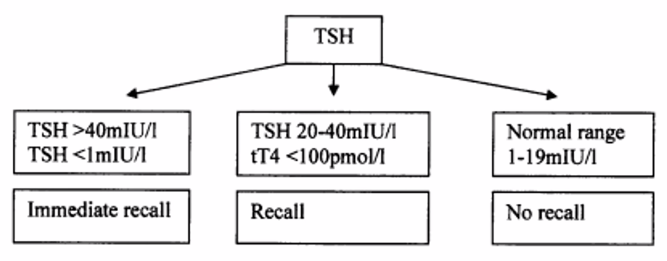
  • Test TSH with a reflex T4 if TSH is high
  • T4 with reflex TSH if T4 low
  • Heel prick (day 2-5 of life) vs cord blood
  • Repeat screen at 2-6 weeks?
  • Confirmation tests TSH + T4 or fT4
The testing plan with the RIA TSH ELISA used at Red Cross Children’s hospital

Problems with congenital hypothyroidism screening in South Africa

  • Long recall success and high default rate
  • Long delays before review and to starting treatment

Only 34% patients are contactable in SA after testing positive (audit by Dr. Michelle Carrihil). Many patients who were recalled – still defaulted.

Treatment

Levothyroxine is the Rx of choice. The aim is to raise T4 and normalise the serum TSH. If given withing the first 2 weeks of life, it can prevent intellectual impairment in >90% of cases.

Conclusion

  • This patients intellectual impairment and the associated social implications of this could have been prevented with an effective screening programme.
  • Screening programmes despite being projected to be effective, can have many unforeseen difficulties
  • Auditing screening programmes regularly and implementing improvements is a necessary part in ensuring its efficacy

References

  1. Carrihill, M. 2008. An audit of the thyroid screening programme in the Peninsula Maternal and Neonatal Services. University of Cape Town.
  2. https://www.who.int/bulletin/volumes/86/4/07-050112/en/
  3. Uptodate section on congenital hypothyroidism
  4. BURTIS, C. A., ASHWOOD, E. R., BORDER, B., & TlETZ, N. W. (2001). Tietz fundamentals of clinical chemistry. Philadelphia, WB. Saunders.
  5. Medscape section on congenital hypothyroidism


Anti thyroid hormone resistance

HOSP # WARD Obstetrics
CONSULTANT   Dr. Khalid / Dr. Jody Rusch DOB/AGE 27y female

Abnormal Result

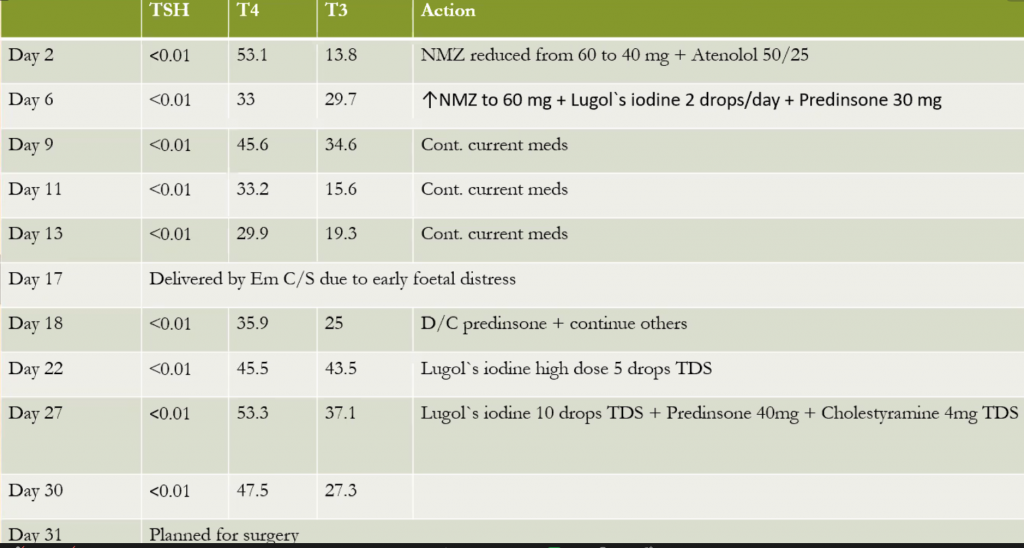
TSH<0.01 IU/L, Free-T4 53.1 pmol/L Free-T3: 13.8 pmol/L

Presenting Complaint

G2 P1 GA 30 wks, presented with a large thyroid gland.

Was admitted with uncontrolled hyperthyroidism and congestive cardiac failure.
ECHO: RHD, severe MR, severe TR, EF = 56%
Foetal U/S: normal singleton pregnancy matching with gestational age & no obvious congenital malformations

History

Patient was diagnosed with hyperthyroidism in 2019
Received interrupted courses of NMZ (20 to 30 mg)
Now she is on regular 30 mg NMZ since April 2020, which increased to 40 mg and then to 60 mg in March 2021

Examination

GCS 15/ 15
BP 126/ 63 Pulse 99
Enlarged thyroid mostly Rt lobe with bruit, no eye signs, no enlarged LNs
Had gallop, pan systolic murmur, basal creps and lower leg edema

Laboratory Investigations

Other Investigations

Chest X-ray and CT-chest revealed –> No PE, tracheal narrowing.

U/S thyroid -> A large isoechoic nodule, occupying the whole RT lobe, TIRAD 3.
FNAB RT nodule -> Consistent with cyst, Bethesda 1.

Final Diagnosis

Resistance to antithyroid drugs

Take Home Message

ATDS Resistance, Pregnancy & Lactation

  • Antithyroid drugs (ATDS) have been used in clinical practice for more than half a century
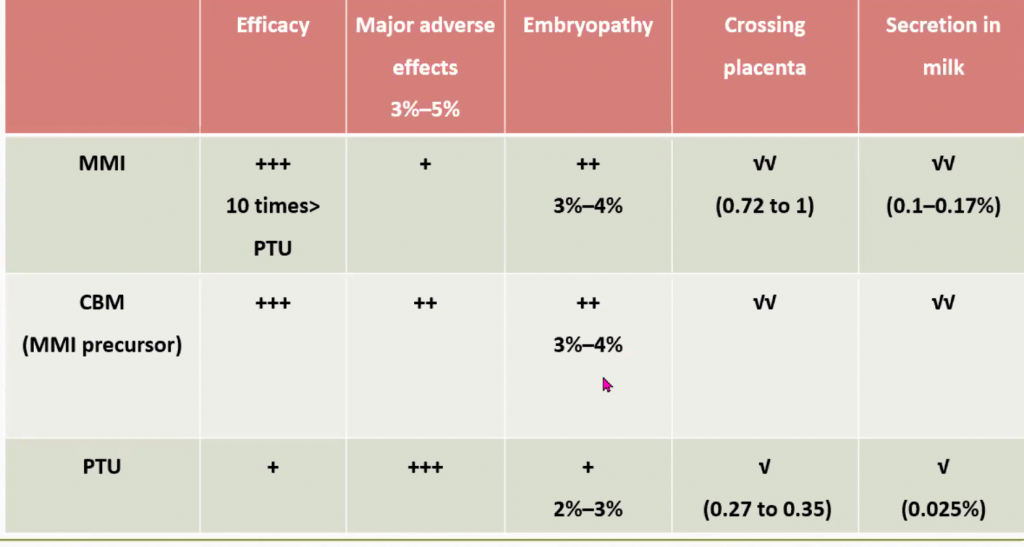
  • ATDs side effects occur in 3%—5% of patients, the majority of which are allergic reactions such as skin rash, whereas the severe side effects of agranulocytosis (0.15%) and liver failure (<0.1%) are rare.
  • Birth defects occurs in 2%—4% of children who have been exposed to MMI in early pregnancy, especially during gestational weeks 6-10.
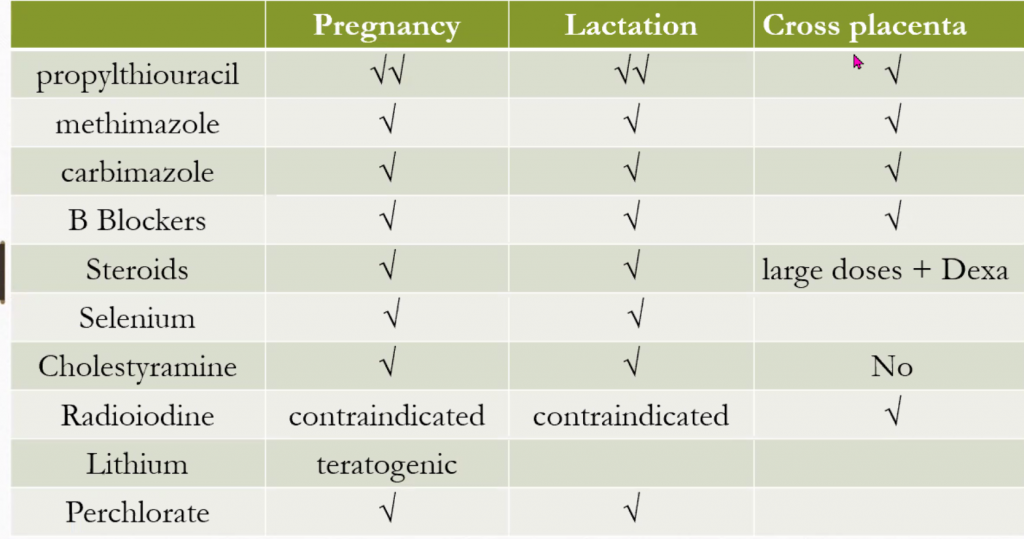
  • MMI, PTU, & CM, all cross the placenta, and can modulates fetal thyroid function. Importantly, all ATDs tend to be more potent in the fetus than in the mother. Thus, when the mother is made euthyroid, the fetus is often over treated.
  • Therefore, the aim of treatment is to use the smallest possible dose to maintain maternal TT4/ FT 4 values at, or just above the pregnancy—specific ULM.

Effects of ATDS on pregnancy:

  • Drug or class effect
  • Daily or cumulative dose
  • Time and duration of exposure
  • Maternal thyroid function

Timing and type of treatment

A subset of the observational studies performed included a group of children considered as exposed to both MMI and PTU in earlv pregnancy. Half of the studies reported that such ‘double exposure’ was associated with a higher risk of birth defects as compared to non-exposed.

A more detailed evaluation of double exposed cases has indicated that the duration of MMI exposure in early pregnancy is critical. This finding may favor a shift in therapy prior to pregnancy also given that the critical window of exposure is from pregnancy week 6 to 10.

Maternal Thyroid Function

A small subset of observational studies on the use of ATDs and birth defects
provided data on maternal thyroid function in pregnancy.
– However, in one of the cohorts, maternal overt hyperthyroidism was a risk factor for birth defects in the child (adjusted HR: 1.91).
-In the Japanese study (2012), it was also reported that the frequency of birth defects was higher in hypothyroid women compared to euthyroid women.
-In another report from Japan sowed a rate of fetal malformations of:

  • 0% (0 of 126) in treated euthyroid women
  • 1.7% (2 of 117) in treated hyperthyroid women
  • 6% (3 of 50) in untreated hyperthyroid women

Anti-thyroid Drug Resistance

Sporadic cases of resistant thyrotoxicosis are reported.
Etiologies of resistant thyrotoxicosis in literature include type I amiodarone induced thyrotoxicosis (AIT) and Graves disease.
Refractory cases have mostly shown resistance to high dose thionamides and beta-blockers; rarely resistance to iodine has also been reported.

Possible mechanisms responsible for resistance to ATDs include:

  • Noncompliance is the most likely culprit
  • Drug malabsorption
  • Rapid drug metabolism
  • Antidrug antibodies
  • Impaired intrathyroidal drug accumulation or action
  • Predominant elevation of T3 rather than T4 levels

Workup of Patients with Resistant Thyrotoxicosis.

  • Evaluation of patient compliance.
  • Urinary iodine excretion to exclude iodine contamination
  • hilalabsorption of the drug: careful history taking and physical examination.
  • Measurement of drug levels and plotting in a normal concentration-time curve
  • Measurement of anti-drug antibodies (Recovery test I incubation with Protein-G)
  • Intrathyroidal ATDs concentrations (high pressure liquid Chromatography).
  • Resistance to drugs can be tested by performing a perchlorate discharge test
  • Thyroid peroxidase activity.

Perchlorate discharge test

Perchlorate inhibits NIS function (sodium iodine symporter) eliminating the iodine gradient which is required for maintaining the iodine in the gland. This will results in a partial discharge of radiolabelled iodide from the thyroid indicating an impaired organification.

  • A test dose of radioiodine administered first, and then 2 hrs later Potassium perchlorate or
    thiocyanate is administered.
  • Perchlorate or thiocyanate is a competitive inhibitor of iodine transport into thyrocyte.
  • In normal individuals in whom the organification and coupling remain intact only <10% of radioiodine is discharged (leaked), when iodine transport is inhibited.
  • In individuals with defective organification and coupling, 40-90% of radioiodine is discharged (leaked), when iodine transport is inhibited.

Treatment of resistant thyrotoxicosis

Resistant thyrotoxicosis is managed by definitive treatment options: surgery or radioactive iodine ablation after euthyroidism is achieved by ATDs to minimize perioperative adverse events.

No specific guidelines for euthyroidism restoration before definitive treatment and authors have advocated the use of the following adjunctive therapies:

  • Iopanoic acid
  • Steroids (1 mg/ kg/ day)
  • Potassium iodide solution (50—100 mg/d)
  • Cholestyramine (4 g TDS)
  • Lithium (400 mg twice daily)
  • Steroids + Lithium / Steroids + Iopanoic acid
  • Plasmapheresis
  • Selenium

Practical points:
A dose of up to 90 mg CBZ was used in non-pregnant in literature (ATA recommendation in pregnancy 10 mg to 40 mg).
A dose of 150 mg MMI was used in literature in non-pregnant (ATA recommendation in pregnancy 5 mg to 30 mg)
A dose of 2000 mg PTU was used in literature in non—pregnant (ATA recommendation in pregnancy 100 mg to 600 mg)
The goal of treatment of hyperthyroidism in pregnancy with thionamides is to maintain free T4 in the upper normal range using the lowest possible dosage.
Combination of MMI + PTU was used in the literature

Beta Blockers use in pregnancy

Beta—adrenergic blocking agents, such as propranolol 10 – 40 mg every 6—8 hours may be used for controlling hypermetabolic symptoms.

The dose should be reduced as clinically indicated. In the vast majority of cases the drug can be discontinued in 2—6 weeks.

Long—term treatment with B-blockers adverse effects in pregnancy:
1. Small for gestational age 2.Foetal bradycardia 3.Neonatal hypoglycemia 4.One study suggested a higher spontaneous pregnancy loss rate when both – MMI & BB were taken together compared to patients receiving only MMI.


Type 2 Diabetes in a 13year old male

HOSP # MRN123441843 WARD Paediatric Endocrine clinic
CONSULTANT Dr. Jody Rusch DOB/AGE 13 y male

Abnormal Result

HbA1c = 6.6%

Presenting Complaint

This patient self-presented to a GP and referred to the Pediatric endocrinologist at Red Cross Children’s hospital.

History

The patient, an orphan, had a family history of type 2 DM. The late mother (due to breast CA) and the uncle was confirmed with Type 2 DM. The patient reported self-monitoring of glucose with a point of care device, reported having a glucose at times of 13-14mM. This was thus suspicious for DM2. He reported being active and “running 5-6km on some weekends”.

The patient did not report polyuria, but there was a history of polydipsia occasionally.

Examination

BP elevated, pulse regular, BMI 28.3
Acanthosis nigricans was noted, as well as an oily skin.

The rest of the examination was essentially normal.

Anthropometry: not short, overweight

Laboratory Investigations

HbA1c = 6.6%

An OGTT was done, but unfortunately the glucose was out of stock so we needed to make another plan, thus 50% Dextrose (150ml) was given as the 75g glucose equivalent.

Baseline 4.9 mM; 2h 7.8mM

Criteria for interpretation of Oral GTT (WHO guidelines 1999/2007):
Impaired Fasting Glycaemia:
Fasting plasma glucose 6.1 – 6.9 mmol/L
2 hour glucose during 75g OGTT < 7.8 mmol/L Impaired Glucose Tolerance: Fasting plasma glucose < 7.0 mmol/L 2 hour glucose during 75g OGTT 7.8 – 11.0 mmol/L

Diabetes Mellitus: Fasting plasma glucose >= 7.0 mmol/L OR
2 hour glucose during 75g OGTT >= 11.1 mmol/L

Other Investigations

  • TSH normal
  • Free-T4 = 11.2 pM
  • ALT = Normal and no signs of fatty liver disease (although an ultrasound was not performed).

Central hypothyroidism was also suspected. A synacthen stimulation test can be performed to assess the function, but the fact that the TSH is normal, fairly confidently excludes this diagnosis.

Urine protein:creatinine ratio = normal
Ultrasound not done yet to determine whether there’s a fatty liver

Final Diagnosis

Diabetes Mellitus type 2 in a child, likely a case of MODY (maturity onset diabetes of the young), although this would likely not present itself in a child with the phenotype of a type 2 diabetic child.

Take Home Message

Diabetes Mellitus type 2 is increasing at an enormous rate, even to the extent that children are starting to become affected.

MODY is caused due to a range of genetic diseases involved in insulin signalling and control. The most wel-known gene is most likely that of glucokinase. However, the most prevalent gene affected in MODY-affected individuals is Hepatocyte Nuclear factor 1 alpha (HNF1A) gene. The optimal treatments differ between the different causal genetic defects.

Type Genetic defect Frequency Beta cell defect Clinical features Risk of microvascular disease Optimal treatment
1 Hepatocyte nuclear factor-4-alpha <10% Reduced insulin secretory response to glucose Normal renal threshold for glucose Yes Sulfonylureas
2 Glucokinase gene 15 to 31% Defective glucokinase molecule (glucose sensor), increased plasma levels of glucose are necessary to elicit normal levels of insulin secretion Mild, stable, fasting hyperglycemia, often diagnosed during routine screening. Not progressive. Generally no Diet
3 Hepatocyte nuclear factor-1-alpha 52 to 65% Abnormal insulin secretion, low renal threshold for glucose Low renal threshold for glucose, +glycosuria Yes Sulfonylureas
4 Insulin promoter factor 1 Rare Reduced binding to the insulin gene promoter, reduced activation of insulin gene in response to hyperglycemia Rare, pancreatic agenesis in homozygotes, less severe mutations result in mild diabetes Yes  
5 Hepatocyte nuclear factor-1-beta Rare   Pancreatic atrophy, renal dysplasia, renal cysts, renal insufficiency, hypomagnesemia Yes Insulin
6 Neurogenic differentiation factor-1 Rare Pancreatic development   Yes Insulin
Data from:Naylor R, Philipson LH. Who should have genetic testing for maturity-onset diabetes of the young? Clin Endocrinol (Oxf) 2011; 75:422.
Ramesh SC, Marshall I. Clinical suspicion of Maturity Onset of Diabetes of the Young in pediatric patients diagnosed with diabetes mellitus. Indian J Pediatr 2012; 79:955.
Thanabalasingham G, Owen KR. Diagnosis and management of maturity onset diabetes of the young (MODY). BMJ 2011; 343:d6044.
Graphic 83071 Version 5.0
© 2021 UpToDate, Inc. and/or its affiliates. All Rights Reserved.


Quadruple-H

HOSP # 42170712 WARD Endocrinology OPD
CONSULTANT   Dr. Heleen Vreede DOB/AGE 37y female

Abnormal Result

  • The patient’s calcium measured 2.91 mmol/L on two occasions, with PTH measuring 40.6 pmol/L
  • VitD 13.6 (<50 = deficient)
  • TFT’s TSH 0.01 T4 26.7pmol/L

Presenting Complaint

Presented at the GIT clinic in Feb 2020 with persistent vomiting and abdominal cramps, which was ongoing since November 2019.

History

  • Patient was diagnosed with hypertension in her early 20’s.
  • Initiated on HCTZ – subsequently changed to Atenolol 25mg dly – not overweight at the time
  • Gastroscopy was normal
  • No psychiatric symptoms reported – mood swings are reported occasionally by the family
  • Oligomenorrhoea – started in 2019 – nothing else wrong was noted.
  • Normal menarche – normal regular menses until the diagnosis of hypertension was made.
  • Amenorrhoeic last 4 years on no medication currently

Examination

  • Increased BMI – quite significantly increased
  • BP 170/90
  • Skin: Significant amount of skin tags, acanthosis nigricans
  • No striae or bruising
  • No Sx of thyroid disease.
  • Physical examination unremarkable.
  • Normal pulses
  • Essentially a normal examination other than the high BMI

Laboratory Investigations

Repeated bloods (5 days after initial presentation): 

  • TSH 3.13 T4 12.5
  • PTH 28 pmol/L (1.6 -6.9)
  • Ca 2.79
  • Inorganic phosphate 0.77 L mmol/L (0.78 – 1.42)
  • LFT’s: Normal
  • Creat Normal
  • U-Ca 5.6 (no creatinine to compare ratio)
  • FSH 3.2 IU/L
  • LH 2.0 IU/L
  • E2 244 pmol/L
  • Dehydroepiandrosterone sulphate (DHEAS) 2.4 umol/L (1.7 – 9.2)
  • Testosterone 0.5 nmol/L (0.3 – 1.7)
  • SHBG 25.9 L nmol/L (32.4 – 128.0)
  • Prolactin 11.5
  • TSH-Receptor antibodies: Negative

Other Investigations

The patient still had occasional vomiting, abdominal cramps and unexplained muscle pain – other electrolytes apart from calcium, magnesium and phosphate is also advised, as is osmolarity as fluid and electrolyte imbalance may be an effect, rather than a cause of the nausea, vomiting and muscle pain – the sodium and potassium was normal however.

See below, for the hypertension, phaeochromocytoma can be excluded by a 24-hour fractionated urinary metanephrines analysis.

Final Diagnosis

  • Primary hyperparathyroidism is on top of the differential diagnosis and is likely the cause of the raised total calcium.
  • Another cause of the raised blood pressure could very likely be a phaeochromocytoma.
  • It was also advised for replacement of Vitamin D, after a repeat measurement.
  • Other features of MEN-1 syndrome needs to be excluded.

Take Home Message

For phaeochromocytoma, 3 separate days’ urine collection is recommended if the suspicion is high, which it isn’t in this case. This increases the sensitivity of the test.

Before testing for MEN-1: one needs to correct Calcium first – since the hypercalcemia could exacerbate gastrin levels.

Increased serum calcium and hypophosphatemia is the net-result of increased PTH. Urinary phosphate will also be high if measured.


Possible Heterophile antibodies

HOSP # MRN77113313 WARD Endocrinology OPD
CONSULTANT   Dr. Jody Rusch / Dr. Khalid Aligail DOB/AGE 21y Female

Abnormal Result

The TSH stayed elevated on our assay (Roche Cobas 6000) with a high-normal free T4.

Presenting Complaint

The patient was seen at the endocrinology OPD for follow-up of her thyroid function tests and review of medications. No acute complaints were noted, but some interesting thyroid function results became known.

History

Previous multinodular goiter with thyrotoxicosis.  Had a complete thyroidectomy March-May 2020.

History of asthma, exema and “other allergies”. 

Current dose of eltroxin = 1.6 ug/kg ~ 100ug/day PO.  The patient (and doctor) declares good compliance to Rx.

Examination

Patient did not have any signs or symptoms of hypo or hyperthyroidism according to the endocrinologist.

Laboratory Investigations

Date 03/05/2021 26/04/2021 23/02/2021 23/10/2020 27/08/2020 08/05/2020 09/03/2020
TSH (uIU/mL) (0.27 – 4.2) •15,17 H 18,54 H 13.10 H 21,61 H 32,19 H δ+>100.00 H  7,72 H
Free T4 (pM) (12.0-22.0)  17,8    17,7    18,3   δ+ 16.0    11,8 L δ-  9,7 L δ+ 13,8  
Free T3 (pM) (3.1 – 6.8)   4,3            4,2                              
Table 1 – Thyroid function tests, cumulative history – Results as on Roche Cobas 6000

The TSH seems to have stayed elevated on our assay (Roche Cobas 6000) with a high-normal free T4.  The free T3 is normal (which I advised should be measured to assess conversion between the hormones). I also sent the sample to Green Point Laboratory where a Beckman DXi analyser is used with a different antibody set of reagents and a different reference range.

Date 03/05/2021
TSH (uIU/mL) 15.4 (0.38-5.33)
Free T4 (pM) 13.6 (7.86-14.41)
Free T3 (pM) 4.3 (3.8-6.0)
Table 2 – results of sample on 03/05/2021 ran on the Beckman DXi

Other Investigations

Auto-immune markers have been requested, since the patient was having prolonged iron deficiency, becoming anaemic, and the clincian raised a suspician of likely celiac disease.

Final Diagnosis

The diagnosis is still unsure, but the likely differential diagnosis is:

  1. Decrease in deiodinase activity due to some reason – there are many causes.
  2. Decrease in absorbtion of Levothyroxine

Take Home Message

Interference in thyroid function tests are commonly enquired about, especially by endocrinologists. This represents a big portion of our non-routine work and often quite a portion of time is spent on education of clinicians who do not necessarily have a laboratory background. Often, esoteric tests are requested which may not be warranted by the clinical scenario.

This case demonstrates a query raised by a clinician about possible interference in the TFT’s which is warranted. It is important to rule out as best one can, interference in the laboratory assay.

Various ways of determining whether interference is the culprit are:

  • Dilution of the sample (in assays where the sample may be diluted – unsuitable for free-T4 as dilution will affect the “free” portion of hormone)
  • Running the test on another methodology
  • Running the test on another analyzer of the same methodology, but with slight differences, such as a different manufacturer of detection antibodies (e.g. Roche vs. Abbott vs. Siemens vs. Beckman vs. Ortho)
  • Precipitating the antibodies e.g. desalting, or PEG-precipitation.
  • Binding the antibodies, e.g. protein G or Protein A
  • Using of “blocking tubes” which is a proprietary blood collection tube to bind antibodies


Lactate:Pyruvate ratio

  1. Don’t measure L:P-ratio when lactate is <2.2mM

If lactate is high:

  1. L:P will be high in mitochondrial problems (hypoxia, mt cytopathy, complex deficiencies) – the common ones.
  2. L:P will be low (<20) in PDHC deficiency, glycogen storage disease,


Methylmalonic acidemia

HOSP # MRN123332237 WARD
CONSULTANT   Prof. George van der Watt DOB/AGE 5 day neonate

Abnormal Result

Grossly increased Methylmalonic acid on urine organic acid analysis

Presenting Complaint

The baby presented as a 1 day neonate at the pediatric OPD with seizures and admitted to ICU.

History

The baby was discharged being normal after birth via a normal vaginal delivery. 24 hours later was brought to the hospital with seizures

Examination

Upon admission the neonate was encephalopathic with uncontrollable seizures.

Laboratory Investigations

Test Result (mmol/L)
Na   142  
K   5,8  
Cl   108  
Bicarb    12 L
Anion gap    28 H
Urea  16,3 H
Creat   167 H (umol/L)

Other Investigations

Ammonia in this child was >600 umol/L according to the clinician.

The child was managed as a possible urea cycle defect:

Glucose infusion, preventing catabolism, infusion of vitamins (co-factors). It is unknown whether specifically Vitamin B12 was given as well. Child likely had persistent lactatemia, also evidenced by the high lactate peak in the urine organic acid profile.

The neonate demised after 4 days in the ICU.

Urine organic acid analysis (unfortunately only analysed 2 weeks after demise) demonstrated increased levels of methylmalonic acid, 3-OH propionate, lactate, methylcitrate and a C5 dicarboxylic acid (likely glutarate).

Figure 1 – Urine organic acid profile – annotated by Prof. George van der Watt

Final Diagnosis

Methylmalonic aciduria

Take Home Message

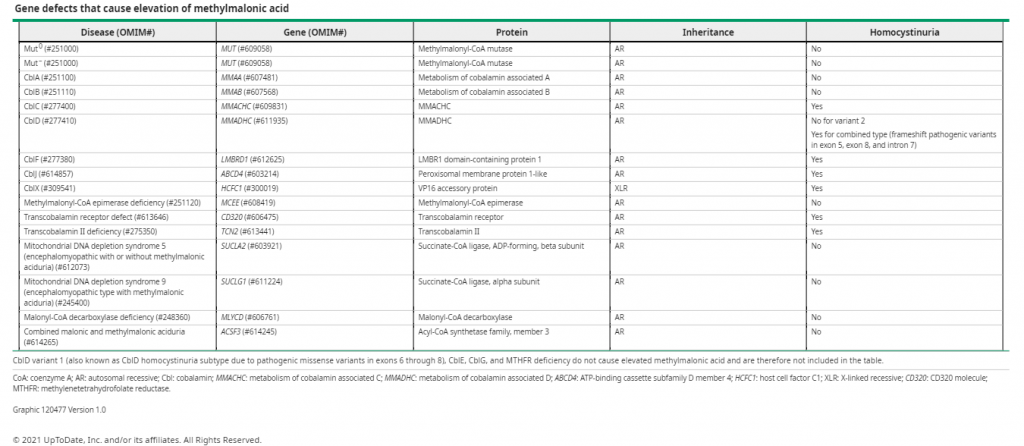
There are a range of genetic defects causing an increase in Methylmalonic aciduria, but this case likely is

Table 1- from Uptodate

Patients presenting with ketosis, acidosis, and hyperammonemia may have methylmalonic acidemia or another organic acidemia. Evaluation of plasma acylcarnitines and urine organic acids can help to make the diagnosis. Organic acidemias may have a similar presentation, although patients with propionic acidemia may have more severe hyperammonemia than patients with MMA.

Other inherited metabolic disorders that cause elevated serum methylmalonic acid include combined malonic and methylmalonic aciduria, mitochondrial depletion syndrome due to autosomal-recessive pathogenic variants in SUCLA2 or SUCLG1, and also vitamin B12 deficiency.