A case of persistent hypocalcemia

HOSP # MRN63985901 WARD Medical Ward
CONSULTANT Dr. Heleen Vreede   DOB/AGE 51 year Female

Abnormal Result

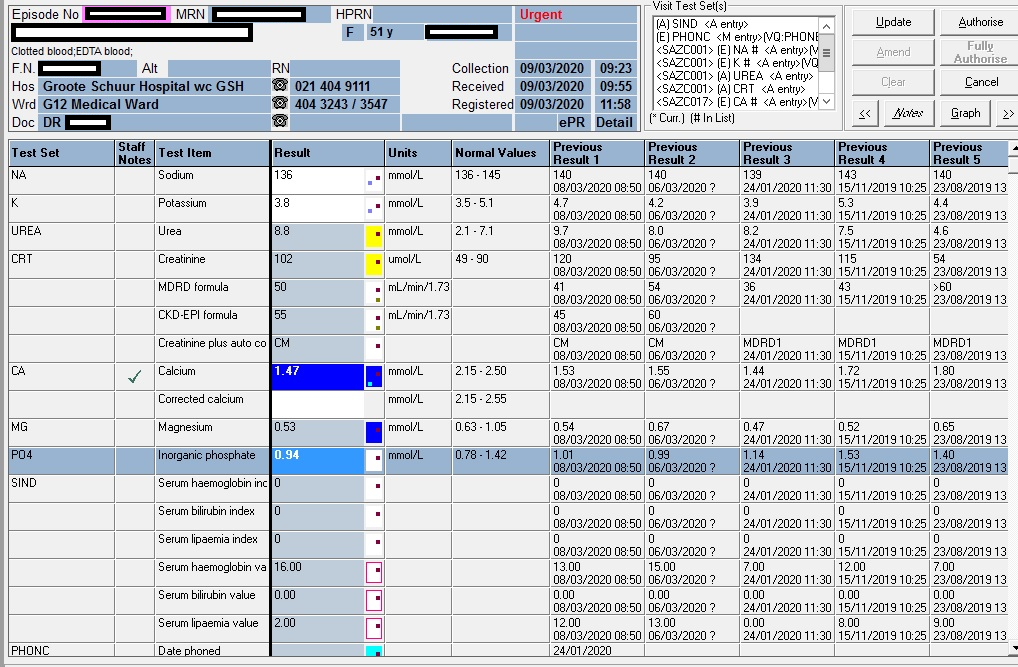
Total calcium of 1.47 mmol/L (2.15 – 2.50)

Presenting Complaint

The patient has been having persistent hypocalcemia despite supplementation with calcium.

History

Figure 1 – Illustration of the patient’s CMP over time:
Calcium: blue; Magnesium: orange; Phosphate: grey
Reference ranges are the horizontal lines without dotted markers

Examination

Not available.

The typical findings in a patient with true hypocalcemia (low ionised calcium) are

Trouseau’s sign

Chvostek’s sign

Laboratory Investigations

Arguably, the first important consideration in patients with low calcium is the albumin. The patient had a mean albumin of 12 g/L, significantly lower than normal (40-50g/L). Arguably, the calcium can be corrected with the well known Payne’s formula to then be 1.47 + (0.02 x (40-12) = 2.03 mmol/L:

Albumin-adjusted calcium (mmol/L) = total calcium (mmol/L) + 0.02 [40 – albumin (g/L)])

Payne RB, Little AJ, Williams RB, Milner JP. Interpretation of serum calcium in patient with abnormal serum proteins. Br Med J. 1973;4:643-646. DOI: 10.1136/bmj.4.5893.643. (View)

Measurement of serum intact parathyroid hormone (PTH) should be performed in all patients with hypocalcemia; it is the most valuable laboratory test for determining the etiology of hypocalcemia:

  2019/11/15 2019/06/28 2018/08/03
PTH (pmol/L)  21,8 H  15,5 H  25,8 H
Reference interval: (1.6-6.9 pmol/L)

Vitamin D

09/09/2020 15/11/2019 03/08/2018
Total Vitamin D (25-OH VitD) 20.5 nmol/L 45.4 nmol/L 23.2 nmol/L
Guidelines for assessment of Vitamin D status:
<30 nmol/L <12 ng/mL Deficient
30-50 nmol/L 12-20 ng/mL Insufficient
>50 nmol/L >20 ng/mL Sufficient
125-150 nmol/L 50-60 ng/mL Safe upper limit
Reference: Revised South African Clinical Guideline for the diagnosis and management of osteoporosis (NOFSA 2017), endorsing the institute of Medicine Dietary Reference intakes for calcium and vitamin D (2010). Note regarding conversion of units:
Divide result in nmol/L by 2.496 to convert to ng/mL
Multiply result in ng/mL by 2.496 to convert to nmol/L

Other Investigations

Anti-Tissue Transglutaminase antibodies: Negative: repeated 3 months apart, with sufficient IgA levels in the serum): 0.9 & 0.8 U/mL (EliA c/o: 6.9)

Anti-Gliadin antibodies: Equivocal: 7.8 & 9.6 U/mL (EliA c/o: 6.9)

Anti-endomysial antibodies: Negative

HLA-DQ2: Positive

HLA-DQ8: Negative

Final Diagnosis

Hypocalcemia likely due to malabsorbtion (telangiectasia stated by the clinicians).

Take Home Message

According to International guidelines the following association is expected for patients with Coeliac Disease:
Positive for HLA-DQ2 (HLA-DQA1*05, DQB1*02)
Positive for HLA-DQ8 (HLA-DQA1*03, DQB1*03:02)

Considering the fact that the albumin was high with an increased PTH, the calcium very likely was physiologically also low (bioactive Ca). The Payne’s formula also failed to correct the calcium to the normal reference range.


A case of Cryptococcal meningitis with hypomagnesemia

HOSP # WARD Victoria Hospital
Female medical ward
CONSULTANT   Heleen Vreede DOB/AGE 29y female

Abnormal Result

The magnesium result measured 0.36 mmol/L ( 0.63 – 1.05 mmol/L) despite adequate levels prior to admission to hospital (0.75 mmol/L on 18/04/2020).

Presenting Complaint

The patient was asymptomatic with regards to the at the time when the result was obtained.

History

Patient was diagnosed with Cryptococcal Meningitis on 22/04/2020 with a cryptococcal latex agglutination test.

Patient was known HIV positive with a CD4-count of 9 cells/uL (332-1642).

Examination

Unfortunately this data is not available.

The clinical features of hypomagnesemia is predominantly related to the derangement in the calcium becoming deranged when hypomagnesemia occurs.

Laboratory Investigations

Other Investigations

None available.

Final Diagnosis

Hypomagnesemia with accompanying hypocalcemia due to Amphoterecin B therapy

Take Home Message

  • I’ve learned from the attending clinician (and a short literature search) that Hypomagnesemia is a known consequence of Amphotericin B therapy.
  • Hypocalcemia is often a consequence of hypomagnesemia (as in this case). This is due to two known mechanisms:
    • Decreased sensitivity of Calcium at the calcium-sensing receptor, with decreased secretion of PTH and hence its effects.
    • Decreased action of PTH due to PTH-receptor resistance being caused by hypomagnesemia.


The Vitamin D cutoff conundrum

Introduction

Vitamin D status is considered important for calcium balance and bone health as 1,25 (OH)2 vitamin D (calcitriol) promotes calcium absorption from the gut and has pleiotropic effects in bone. Vitamin D deficiency leads to hypocalcaemia and osteomalacia or rickets in adults and children respectively.

Vitamin D status was also brought under the spotlight owing to an apparent association with cardiovascular health and several other chronic disorders. These associations were noted in animal studies but the findings were not mirrored in humans. Vitamin D sufficiency or insufficiency is determined using quantitative analytical techniques, with results interpreted against statistically-determined cutoffs.

The Controversies

Controversies exist due to the analytical methods as well as the methods to determine these decision limits. The analytical methods available to quantify vitamin D include immunoassays and HPLC or LC-MS/MS methods. The majority of labs use immunoassays to measure 25(OH) vitamin D (calcidiol), and a smaller group also measure calcitriol by immunoassay. Calcidiol occurs at higher concentrations in the serum and, in most cases, it better reflects the vitamin status than calcitriol, as 1-alpha-hydroxylase activity is modulated according to calcitriol and calcium status.

However, immunoassays are non-specific regarding metabolites of vitamin D and therefore results of calcidiol and calcitriol measurement may not be accurate due to cross-reactivity. LC-MS/MS is a much more accurate methodology to measure both calcidiol and calcitriol as well as other metabolites of interest, such as 24,25(OH)2 vitamin D. One controversial point is, therefore, whether or not calcidiol and calcitriol measurements by immunoassay are accurate.

The second controversy lies in the determination of the decision limits for vitamin D repletion, sufficiency and insufficiency. Currently, there are two major sets of decision limits to choose from. The first were determined and recommended by the Endocrine Society based on recommended daily allowances (RDA) for the vitamin. It is argued that the concept of the RDA is misinterpreted and the methods for setting the RDA not understood. These decision limits are high, and by these limits some 50% of most populations are diagnosed with vitamin D insufficiency. This is also dangerous, as replacement of vitamin D may lead to hypervitaminosis D, which is not benign and may in fact increase the risk of falls and fractures. Another consequence is the demand for testing vitamin D levels is very high, which is expensive for healthcare funders or individuals, with questionable health benefits.

The other popular set of decision limits were determined based on the risk of falls and fractures (Institute of Medicine) – a more functional approach. The result of using these limits is that the majority of the population will fall into the vitamin D sufficient or replete groups, and only individuals at high risk will have their status checked and/or monitored and receive supplementation as necessary. This is a more cost- and clinically-effective approach, but is yet to be globally adopted.

Vitamin D and Cardiovascular Disease: Controversy Unresolved ...

The final point to be made is perhaps what drives the interest in vitamin D status, and it may be suggested that it is the reagents and pharmaceutical industry as they stand to gain from increased testing and demand for supplements.


Hypocalcemia with Hypomagnesemia

HOSP # WARD Internal Medicine ward
CONSULTANT   George vd Watt / Heleen Vreede / David Marais DOB/AGE 58 y Male

Abnormal Result

Upon signing out blood results:

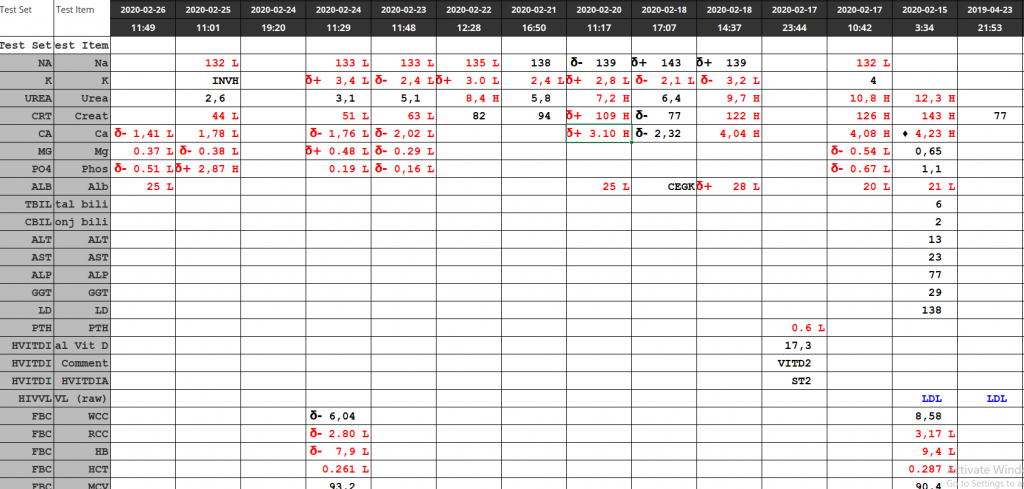
Calcium = 1.41 mmol/L – Critically low Calcium result

Magnesium = 0.37 mmol/L – Critically low Magnesium

Presenting Complaint

Loss of breath initially accompanied by weight loss.

Upon admission to the ward, patient was slightly delirious, but still able to walk and talk.

History

Patient with metastatic lung cancer and accompanying hypercalcemia, a week prior to the results as at present.

Doctor has given IV Bisphosphonate after the hypercalcemia was noted a week prior (Calcium = 4.23 mmol/L; Alb = 21 g/L; Corrected Ca = 4.61 mmol/L)

Examination

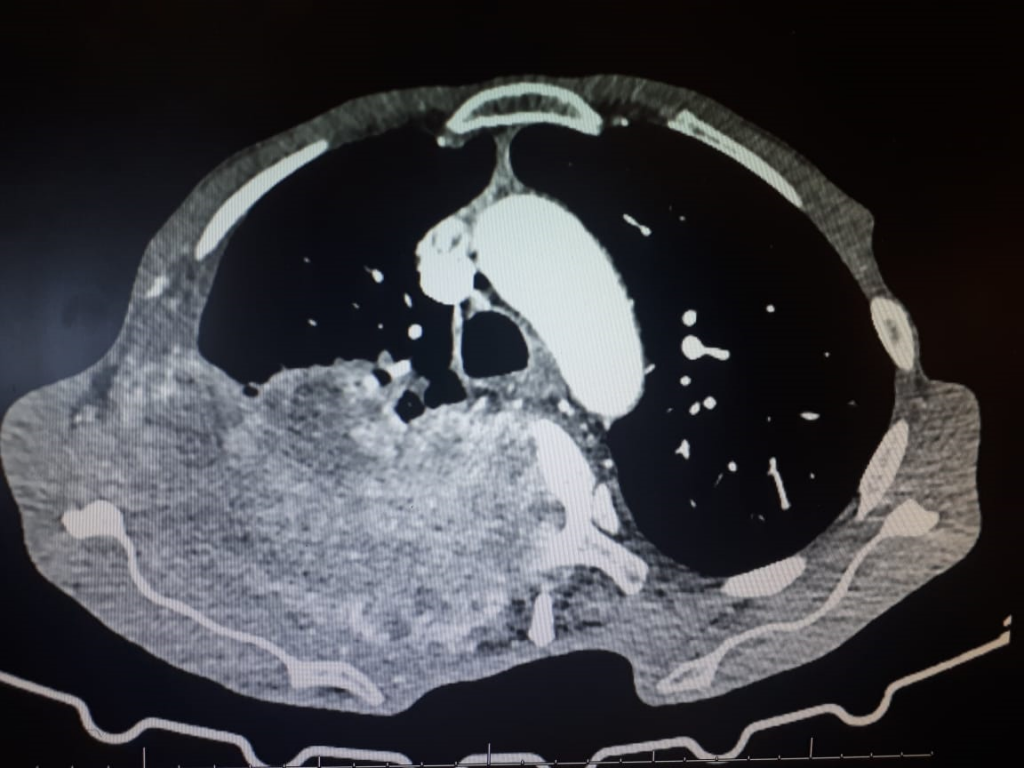
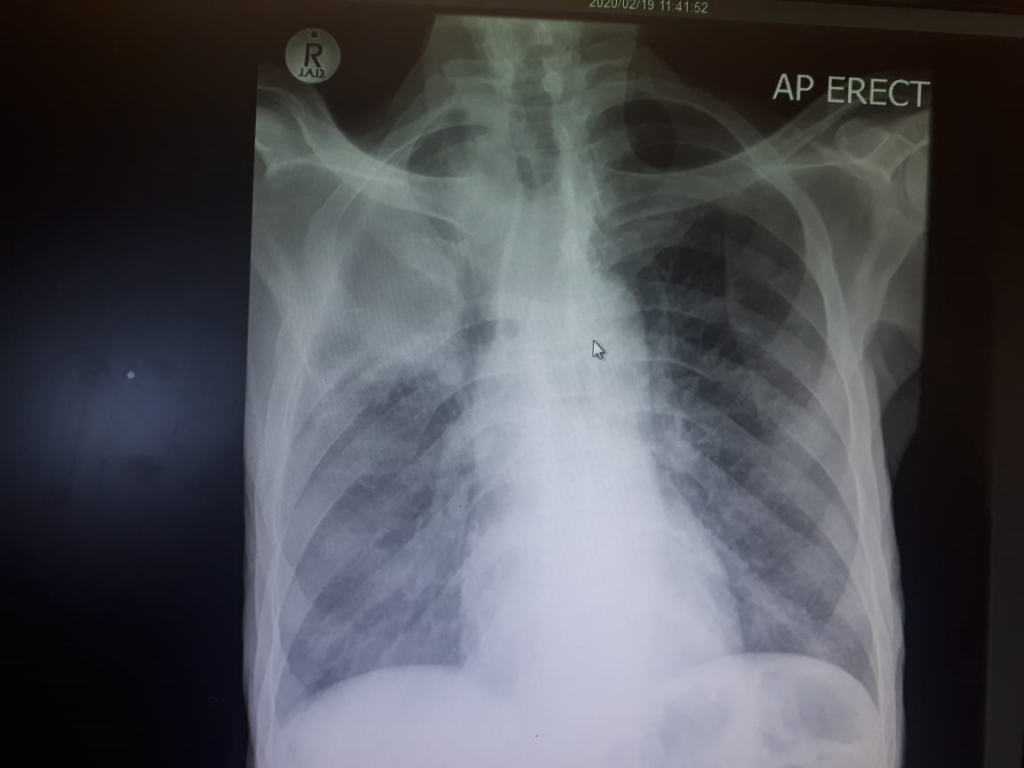
Extensive Crepitations over all the right lung fields.

Laboratory Investigations

Other Investigations

Chest X-Ray AP erect 19/02/2020
CT thorax

Final Diagnosis

Invasive lung CA with “hungry bones” after IV Zolendronic Acid

Vitamin D deficiency, preventing Calcium absorbtion after the Zolendronic acid started its action of inhibiting bone resorption.

Take Home Messages

CA causes hypercalcemia

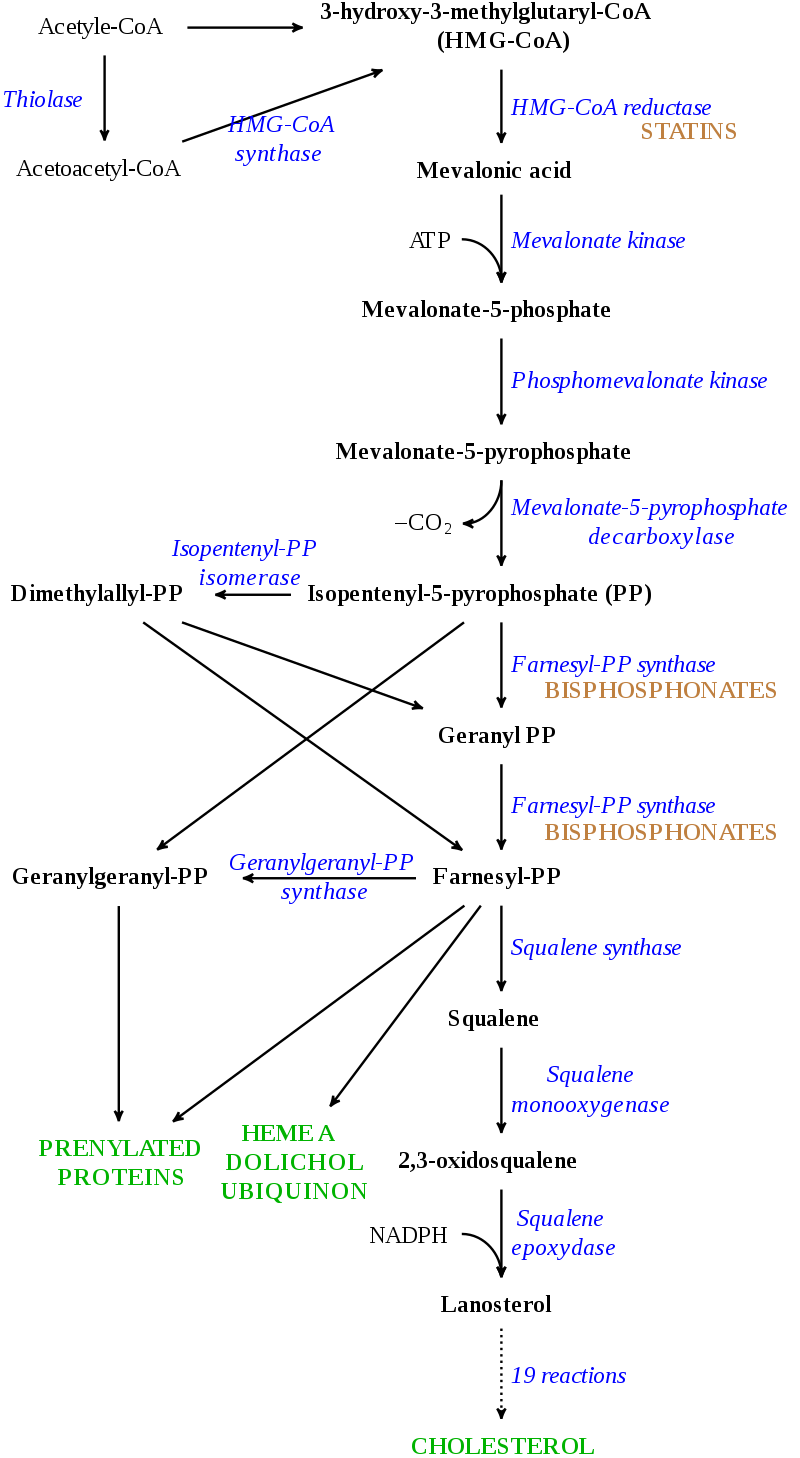
Bisphosphonates inhibits bone resorption. Because 99.95% of Ca in the body resides in bone, the effect in serum (the remaining 0.05% of total body Ca) can be significant.

All bisphosphonate drugs share a common phosphorus-carbon-phosphorus “backbone”:

They differ in the R-groups as above. It binds to calcium hydroxyapatite in bone.

Of the dose infused / absorbed, 50% is excreted unchanged by the kidney, the rest binds to bone tissue, where its elimination half life can apparently be up to 10 years! (UW Courses Web Server- https://courses.washington.edu/bonephys/opbis.html )

Because a bisphosphonate group mimics the structure of pyrophosphate, it can inhibit activation of enzymes that utilize pyrophosphate.

Magnesium follows Calcium levels, but Mg deficiency itself can also cause hypocalcemia.